Leaving Gently

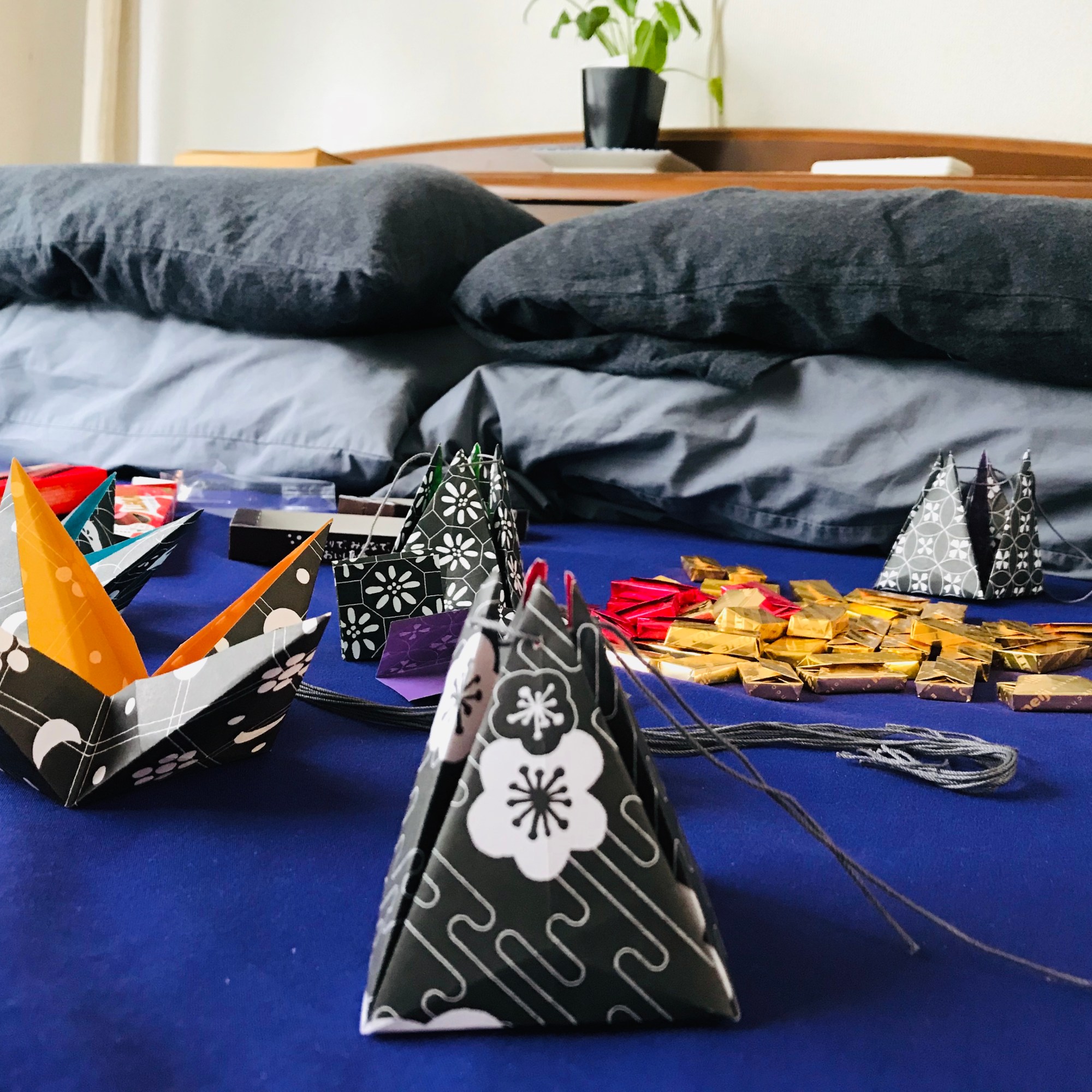
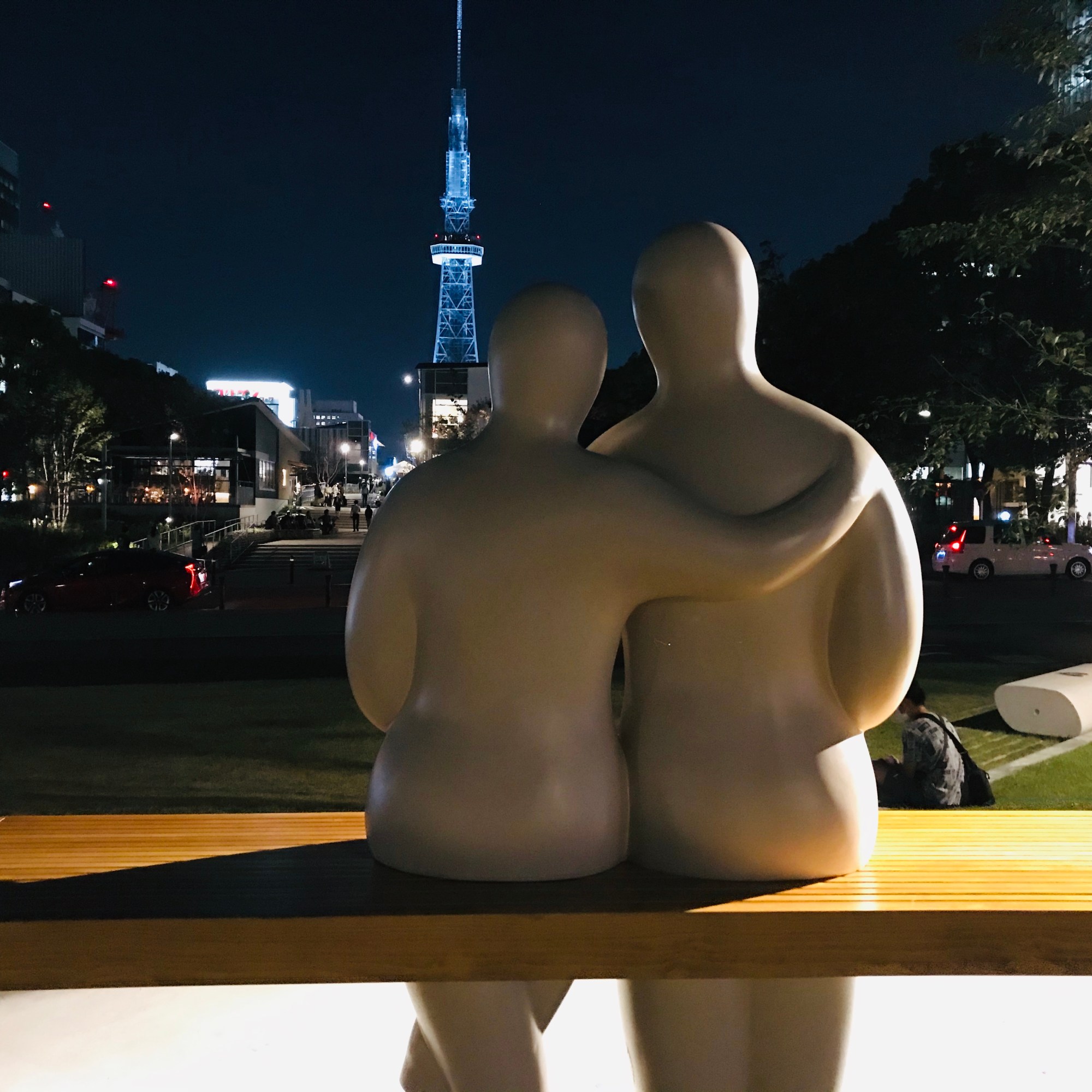
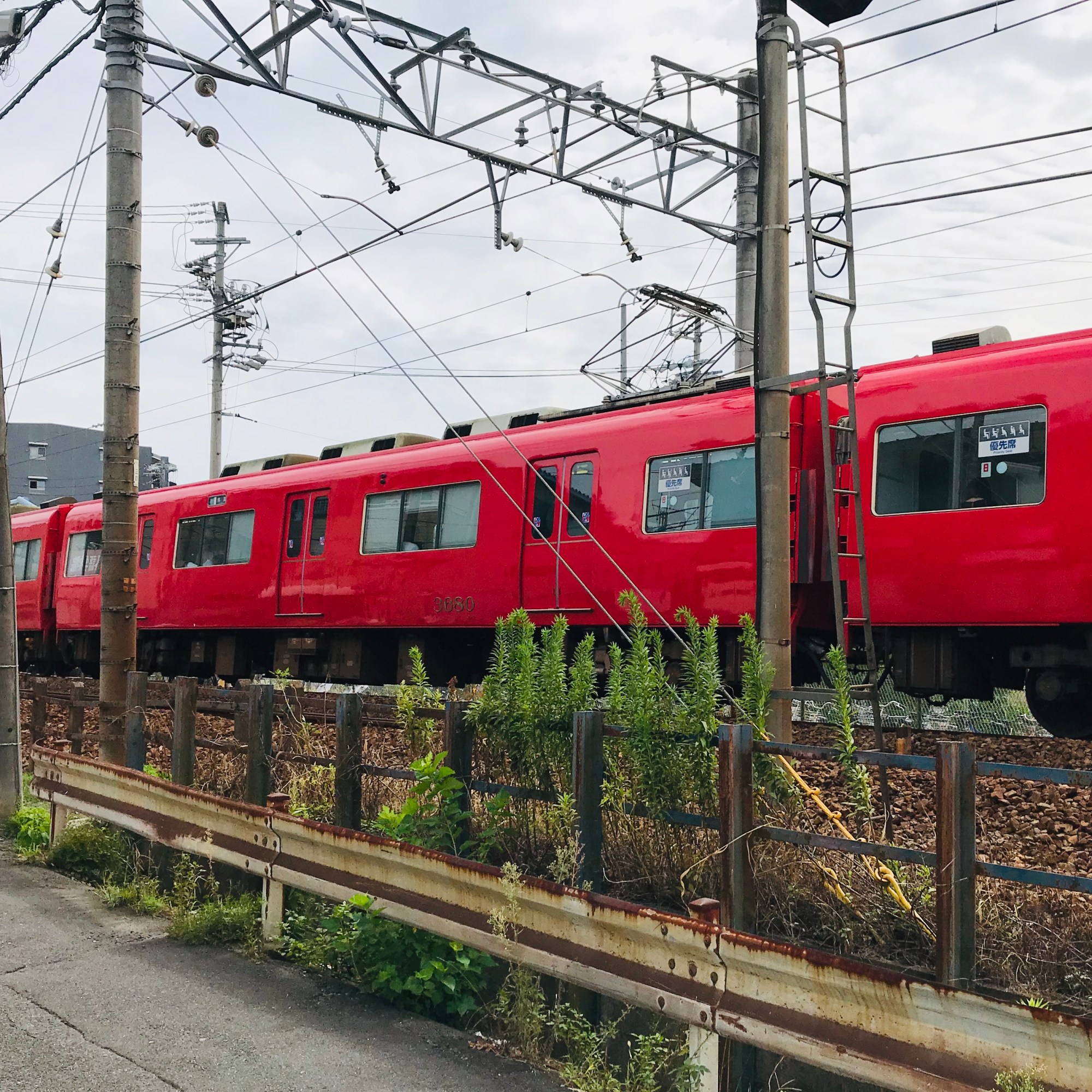
Waking early a few mornings back, I spent the night with my life as an English teacher flashing before me. My six month stint finished and I am called to account. So what do I have to say for myself?
Right now all I can think of is Y. She has three young children and attended an English class with me on a Wednesday morning with her son, T, who is close to 3 years old. Every week, in response to my question how are you, she says busy. On my last day another mother, T, asked the School Director to take a photograph of us and in the late afternoon she returned to the School with the photo, requesting it be given to me. Y’s expression in the photo, although literally masked, looks like a quiet request for help. Am I right? Does it matter? Am I nervous I left something behind? The keys, my passport, my wallet, my lip balm, the directions, the usual pat down? Perhaps it is me that is quietly requesting help? The thing is, when I was facilitating the classes for the little ones and their mums, I felt a very natural desire to help. These women perhaps had relatively easy lives and help was not what they needed, but in this 30 – 40 minute moment, I could, I thought, offer something settling. I wanted to be part of the village. This is an interesting reflection for me. If I did leave something behind I hope it was a gesture of kindness and care. And a salute to what it takes to keep a family’s heart beating, when, given all, one must still attend an English class for their 2 year old.
M. Who teased me in my penultimate week. Offering gifts. Like the clock on the wall or the illustration of the spilled salad in their lesson book, or the staple found wedged in the carpet, or the old pencil bereft of lead. I want to call her a woman. But she is a girl, about 8. With a sophisticated sense of humor and someone I would like to call a friend. M with her compatriots, G, K and S created the scaffolding for each class. Unfortunately I had no skill in behavior management. So they played merrily on the metal bars while I continually clobbered myself. I am not against behavior management. We had training in the use of stars and teams. Stars for positive reinforcement and teams to create the will to behave well. I just couldn’t pull it off. I watched other teachers do this flawlessly. But I felt like a dickhead trying to make it all work. I was very clumsy. And I couldn’t fool my charges. The really interesting thing about this class was that it was my favorite class. That is, while it was M, K and G. When S arrived, the dynamic changed and things went awry. M decided it was her role to ensure S was included, K decided she needed to be in charge of the games. G decided; actually G doesn’t decide, he is a gut man, he just Does, that he had a partner in crime. S couldn’t believe his luck. Many times I tried to riff off their antics. Listen, watch, feel carefully for my moment and jump in, building on the momentum they had created. This worked really nicely sometimes. But not all the time. These kids had spent the day at school, after school they spent an hour with a Japanese teacher learning English grammar, now they had an hour with me. Susan sensai. When it was three it was an organized mess, with four it pretty much was just a mess. On my last day M said “Sensai, present?”. I said. “Oh the clock, or the spilled salad?” M said “House” and “pocket”. She sat down with me and gave me a wrapped gift. It was a small towel. The kind Japanese people use to dry their hands after washing them in public bathrooms. The kind to reside in one’s pocket. My towel had the design of a house on it. M showed me her towel. It was exactly the same. Then the card. The envelope stuck down with the English letters M and S. Momoko and Susan, she said explicitly. I love her.
“Susan Sensai!” Susan Sensai!” Says S as he gives me a Chinese burn, aimed at securing my attention, but lulling me into a quiet reverie. Imagine a 4-5 year old boy seeking to hurt me by putting all his energy into his face rather than his hands (eyes bulging, mouth twitching, jaw tightening). Fortunately for me Sota’s Chinese burn felt like a delicate massage. Poor Sota however looked like he was somewhere between the clean and jerk. He did get my attention though. I miss his Chinese burns. I miss him.
Writing these reflections…I think…I really liked this…I liked this job. But as it happens I didn’t. This is confusing. The students were easy to like. All of them. Every person I met. I liked. I am a little prone to over-liking. A bit gushy. I can over-like many people at one time. I am using this adverb (I had to ask Cameron if ‘over’ used in this way was an adverb – he’s the Go-to-Grammar expert in our relationship) because it sometimes doesn’t feel sustainable and I worry that there may be something neurotic about my liking behaviour. I am sensitive. I feel nervous regularly that people don’t like me back or that I have done something terminally wrong, but nevertheless I keep liking. I guess there is bound to be a direction toward a reflected sense of self. That’s difficult to shift. But beyond all my neuroses I do think there is a true enjoyment of other humans and their ways and the interactions I subsequently experience. And being in a different country adds an element that complements the attraction, because now I am even more curious than usual. So how strange to be unequivocal in my negative feeling for a job that enabled access to the same approximately 100 Japanese people every week across 30 or so weekly classes? I have a few theories but the one I find most convincing today is that something about the job, took away something fundamentally human, I can’t tell you what this is, but it felt like a small chunk from my side was missing. And like a drunk person overcompensating for their drunkness by trying to appear very un-drunk, I tried to appear very human, or very un-non-human. But this only exacerbated a sense in me that something was missing. This is confusing still. My brief foray into studies on Personhood, while researching ways to care for people with dementia, taught me that one is human when one is in connection with other humans. At least that reductionist statement is how I interpreted the literature at the time. Clearly, I was with many humans and I would say I felt connected. But walking through the doors of the schools in which I worked, literally inspired me to draw a deep breath in and hold, hoping it would fill the missing part and keep me from despairing. This leads me to my next neuroses, ‘over-thinking’, and a quiet tap on my shoulder suggesting it’s best to leave this one here.
I have been fortunate to spend time with students and Japanese acquaintances outside of the classroom. Some evening gatherings where I drank too much. Nomunication – a portmanteau of nomu (drinking) and communication, a less popular term now (because of its ‘power harassment’ connotations) but echoing still the delight of many Japanese people, and me it turns out, in using alcohol to speak liberally and honestly about all matters personal – a cultural force. Some day time invitations which took Cam and I into people’s homes, experiencing hospitality and a fluid back and forth, learning about each other without alcohol but perhaps the equally lubricating properties of green tea. There is nothing confusing about these experiences. I feel at all times, when meeting students outside of school, or new friends in their homes entirely natural, entirely human and entirely happy. Perhaps there is something about the context of teaching with a large eikaiwa that is disagreeable?
Other experiences have felt like something from a story book. Visiting Shikemichi some time ago, an old preserved town, I found myself gazing in a shop window. I was curious about what the shop was selling. Second hand goods? Was it a thrift store? What would someone find in there? My staring was noticed by an older woman who came outside the shop and in Japanese seemed to be telling me to wait a moment. She returned to the shop and seemed not to return so I left my post and wandered about, only to be found again by the woman and again, I think, asked to wait a minute. This time she disappeared into a small food outlet. I waited. She did not come. I decided I was wrong again. I was after all acting on pure instinct not on anything I understood. I began walking toward home. Until I heard a beckoning. And the woman. Walking quickly to catch me. We reached each other. And she handed me a plastic bag, lifting the contents from it and explaining something to me in Japanese. I received the bag from her graciously, a little surprised to be gifted food from a stranger. Perhaps she cared for homeless people. Perhaps I looked homeless. I found an interesting place to sit beside a bridge by one of the canals. I ate the okonomiyaki. This word I understood.
I have watched many older women walking around town with shopping trolleys, small women, sometimes with backs so hunched it seems impossible that they could walk. But their mobility is on the contrary exceptional. They remind me of crones from old tales. They are not ugly. They are evocative. I am so drawn to them I fear I may meet my fate if I stray too far. But I need to hear something old and true and wise. One woman might of course tell me a story about abuse, about abandonment, about work so hard her back almost broke, or she might say ‘I am 103’, what do you expect gaijin! There are over 80,000 centenarians in Japan. It’s possible!
______________________________________________________________________________
For now, while Cam and I consider ways to make money and meet our visa requirements, we will head to Hida. Hida is a town in Gifu prefecture, not too far from where we currently live in Nagoya. It is a forested and mountainous area. We will be participating in a volunteer program at a recreation centre, working in exchange for accommodation and food. We will stay from Oct 1 for a few weeks. The center closes in November because the weather becomes seriously cold. We are looking forward to an extended time outside the city walls. We are looking forward.
A Gentle reconnection
I thought to myself, I wish everyday (teaching English) could be like this.
Right now, it’s 10:40pm. I’m eating a derivation of hommus. Cooked chick peas, mashed with a fork, mixed with chopped garlic, toasted sesame seeds, olive oil, salt and pepper. Awkwardly eaten (because it’s consistency is more like rice than a dip) on a black sesame cracker. Accompanied, of course, with beer and potato chips. The potato chips I like say “No Added”, the rest is in Japanese, so I’m not sure what is not added. I presume it is the nasty stuff. As though potatoes, fried to an inch of their life in oil, are not bad enough.
Tomorrow is a day off. Friday. Always a day off…..unless we need to work to “make up” for the public holiday that fell inconveniently in that week and meant we couldn’t work. Oh how I miss a public holiday that turns your 5-day working week into 4. Under our contract, most public holidays require us to work an extra day (sad face).
But today, my only teaching day that is filled with adult classes (Monday to Wednesday and Saturday are mostly children’s classes) was sweet. The hommus, beer and chips was icing on the cake. Today Mary came. I met her 2 weeks ago. A young, shy medical student. More shy today, it seemed. I wondered if I would see her again. In our first class she told me she liked music. Pink Floyd was one band she listened to a lot. I wrote out the lyrics to Wish You Were Here in case I would see her again. Every week we have Free Time classes as part of our teaching schedule. Students pop in at random times and we don’t need to prepare the classes. We have text books to use, but they are easy to follow and often these students like the opportunity to have free conversation. This can be difficult but I almost always like the challenge. I especially like the opportunity for connection. I am doing some slightly off beat things since being in Japan. I sing and I draw stuff. In the classes, while I am teaching! Yes. Me. Who should not sing in public. And cannot draw to save herself. But apparently can draw to save herself when trying to explain concepts like ‘reinvent the wheel’ or ‘Gap year’ or ‘stereotype’ or “What? You’re not wearing a one piece, you are wearing a dress!!!! A dress. A one-piece looks like this. A dress looks like this”. Oh and there was that time that I wanted to tell some younger students (12 year old girls) about the dream I had. So I drew myself (a beautiful, aging stick figure) in a cave with very large turtles coming out of the subterranean lake and me wondering how to get beyond these beautiful but very imposing creatures, until a crocodile speedily overtook the beautiful stream of turtles and threatened to eat me and I woke up gasping for air. I drew that. Yes, I did!
But. Pink Floyd. And, Wish You Were Here. Close to the end of the lesson I decided to pull out the lyrics I had handwritten. I asked Mary if she would like to read them. And then. A boldness overcame me. Would you like to sing with me? She uttered a nervous sound. And I just began……..So, so you think you can tell, heaven from hell, blue skies from pain, can you tell a green field………….Mary sang too. Softly. As I sang I felt like something was rehydrating inside me. Lately I have felt like a flat-pak box. Folded neatly with no room to move. Constricted, but neat. Not getting in anyone’s way particularly. And yet, my head has been popping corn. Constantly. Pop. Pop. Pop. Pop. Pop. No rest. Just this wired, electrical current giving me no peace. How is it possible to be both a flat pak box and a popcorn maker? I have no answer to this? But I have one remedy. Sing. Not by yourself. Sing with another. That may be the one and only time of course. I may get sacked for going off piste or Mary may never return and perhaps who could blame her.
Of course, Dave Gilmour and Roger Waters, were exploring a very different idea, but nevertheless, I sing with a deep and true tone……Wish you were here…….xxxxx
Land of Convenience – 3

Suzuki and Mikiyo are both in their late 60’s. They share the job of building superintendent at our modest, ageing apartment block. Both had been friendly to us, saying hello and goodbye as we went in and out. We needed to park our new (to us) second hand bikes in the building’s modest undercover parking area, and they were the guys to ask. Seemed simple enough, I just needed to get past the language barrier, Susan having kindly allowed me to take on this task. I spent an hour cobbling together a few sentences to make myself understood and set off down the lift to find the superintendent of the day. I found Mikiyo sweeping leaves at the front of the building and, after opening the conversation with what was hopefully an observation about the weather, I launched into my possibly unintelligible request – a handful of nouns, demonstratives and verbs that made perfect sense on google translate.
Mikiyo looked a little taken aback at my attempt and took a few seconds to respond. He spoke softly but confidently with a lovely tenor voice and restated my request in English to see if that’s what I was actually talking about. Yes, I wanted to park 2 bikes in the car park. He led me to the office and gave me 2, no it was 3, forms (all in Japanese) that needed to be filled out by way of application. Very kindly, he circled the parts I needed to fill out and wrote in English the type of information needed – name here, address here etc. He also very kindly pointed out that the cost was to be Y500 per month, per bike and one of the forms was for a monthly banking transfer. Our apartment is located in one of the central business and shopping districts so parking is at a premium, even for bicycles. Mikiyo couldn’t help but look slightly amused as he explained while I nodded and kept saying ‘yes, yes’. I’m sure my eyes started to cross unconsciously. I retreated to number 709, papers in hand, ready for the challenge. It wouldn’t be too hard to fill them out in Japanese. An hour later Mikiyo rang the doorbell. He was sorry but he had forgotten to give me another form that needed to be filled out, also kindly marked with English to show what information needed to go where. The desperate thought crossed my mind – I should just ask him if he could fill it out for me – , but he hadn’t offered and really, it’s only filling out a few forms.
Two days later ….. I triumphantly carried my prize paperwork down the lift to seek out the superintendent of the day. I was pretty happy with the katakana for our names and the hiragana was probably passable, but I was worried about my attempt at kanji. I found Suzuki in the office and lifted up my fistful of papers to get his attention. Unlike Mikiyo, Suzuki doesn’t speak a word of English. Suzuki has a real sense of humour about him and a very friendly disposition. He knew what the paperwork was for of course as Mikiyo had told him about it, and they had both been watching us wrestle our bikes in and out of the tangle of bikes parked on the pavement in the street at the front of the building over the past few days. Suzuki started looking over my handiwork, reading partially aloud with an occasional sharp, clear “Hai” accompanied by glances in my direction. He actually looked a little impressed initially. A few minutes in he stopped to put on a face mask with a ‘whoops, I forgot’ gesture. I wasn’t wearing one either. We were probably a little too relaxed given the circumstances.
It all seemed to get a pass mark until the banking form, the one I thought had needed some kanji. He stopped and looked at me, said something in Japanese. “What the hell is this”, would be my guess. I looked at my pathetic scribble and dropped my head onto the bench saying, “sumimasen, kanji, sumimasen”, in between bursts of laughter. He thought it was pretty damn funny but apparently legible enough. Wait though, what is this where the Hanko stamp should be? It took a few minutes and the translate app to explain that the bank had accepted my hand written initials as my official mark, this having been organised by our employer, and that therefor they need to be on the form, not a stamp – which I don’t have anyway. It’s still very unusual in Japan for handwritten signatures to be accepted on documents. I read recently that the national government were considering changes to the law to allow various legal documents to be processed without the necessity of them being stamped with Hanko. A lot of people were still traveling in to work during the covid-19 state of emergency mainly due to this particular requirement.
His skepticism eventually gave way and with great enthusiasm Suzuki led me to the car park and showed me 2 spaces, 16 and 17, indicating that we could park the bikes there immediately. It was my turn to be surprised. He didn’t have to submit the paperwork first? It didn’t need to go through several layers of bureaucracy over several days before being returned by post with a stamp of approval? I went to get Susan to tell her the news and move our bikes. When we came down Suzuki could see how happy we were and came out to supervise the transition and place the official building parking stickers on our bikes. He genuinely appeared as happy as we were with the arrangement. It never ceases to amaze me, the extent to which it’s possible to get a real sense of connection between people who have no common language other than a shared humanity.
Ahh, what a feeling of equanimity and, indeed, achievement. Now we just have to sort out the compulsory third party insurance.

What comes our way
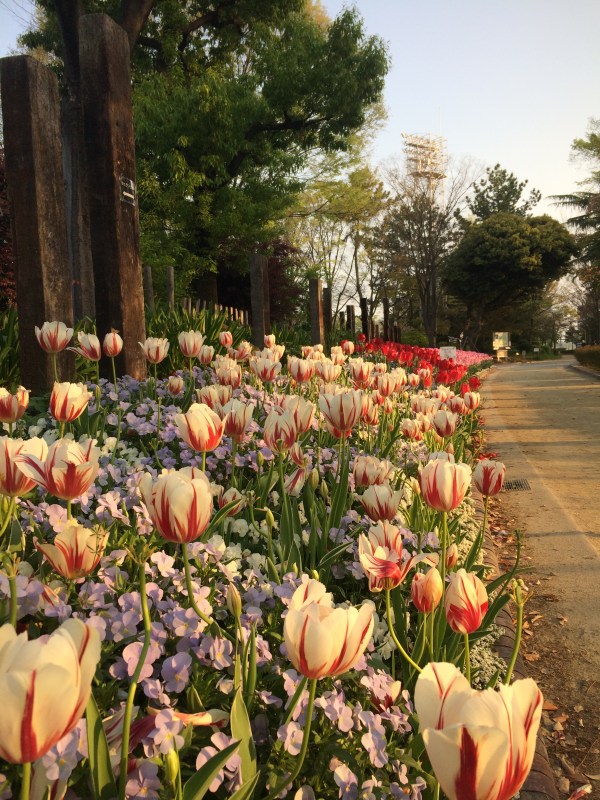
‘What comes our way’ infuses calm. It is……….what happened and…….what may have happened anyway. It is gentle. It introduces a story and hopefully some images if the right miracles happen. It is me attempting to write another blog, not sure where to begin, certain it will come nonetheless….
Excursion
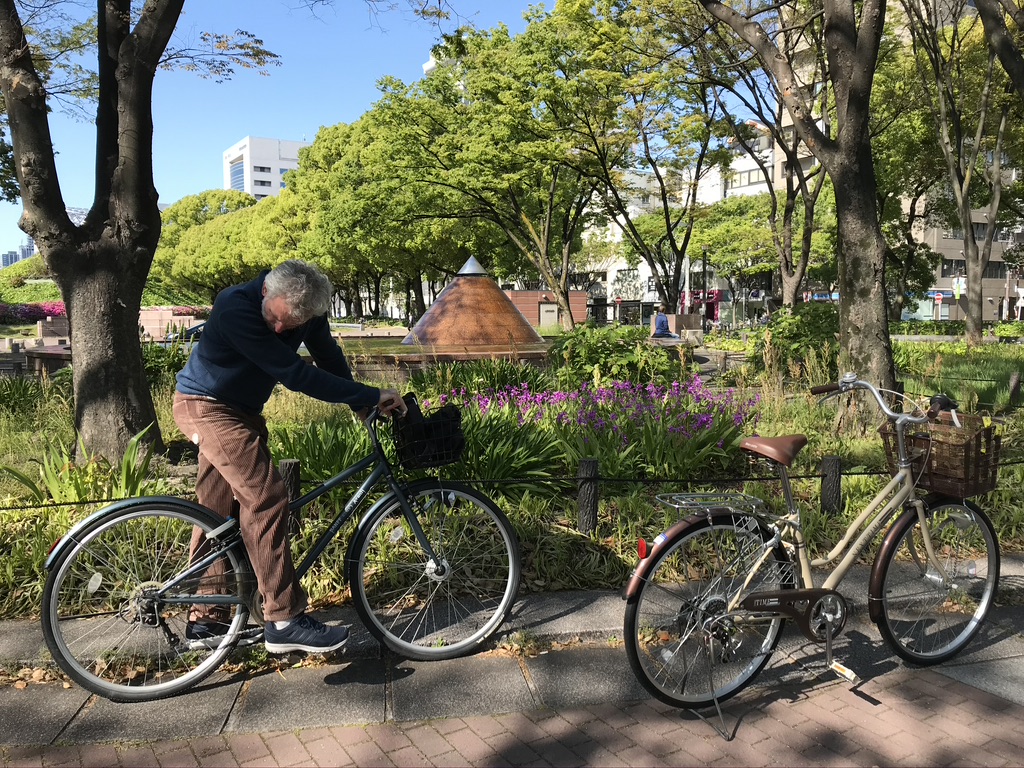
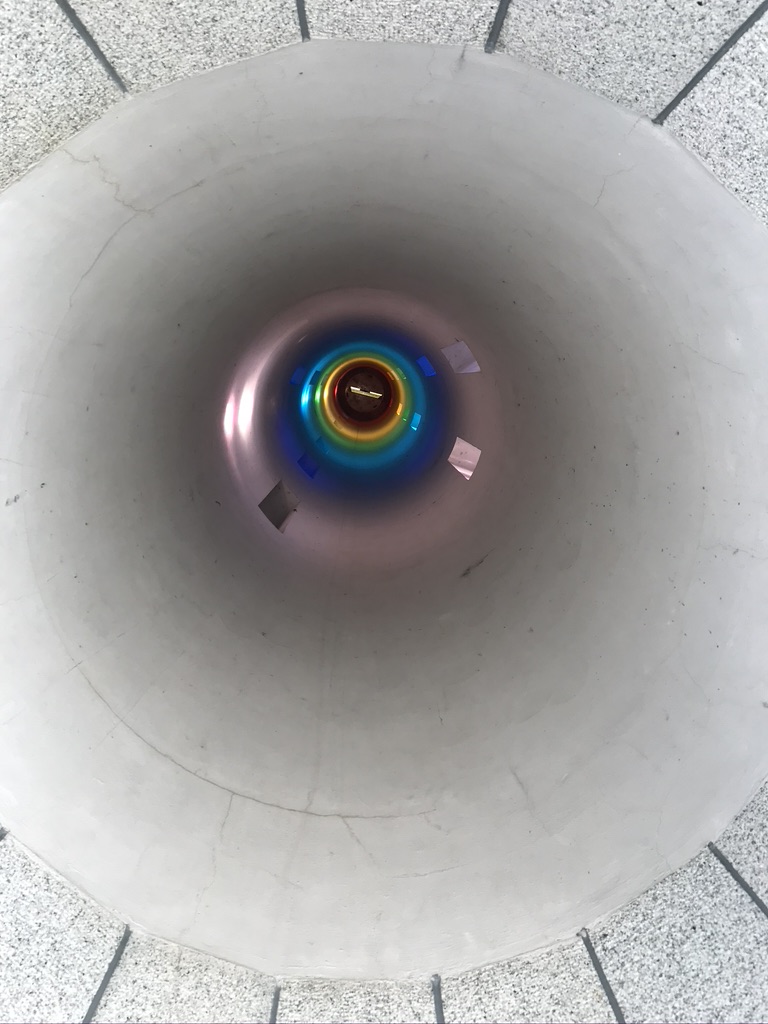
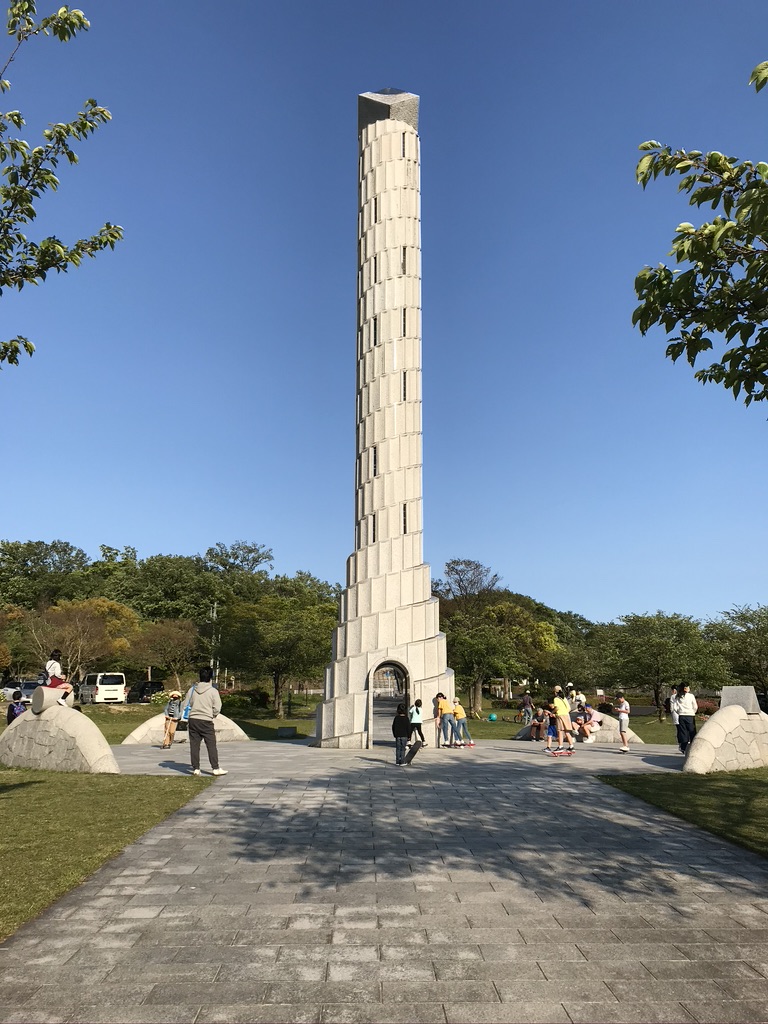
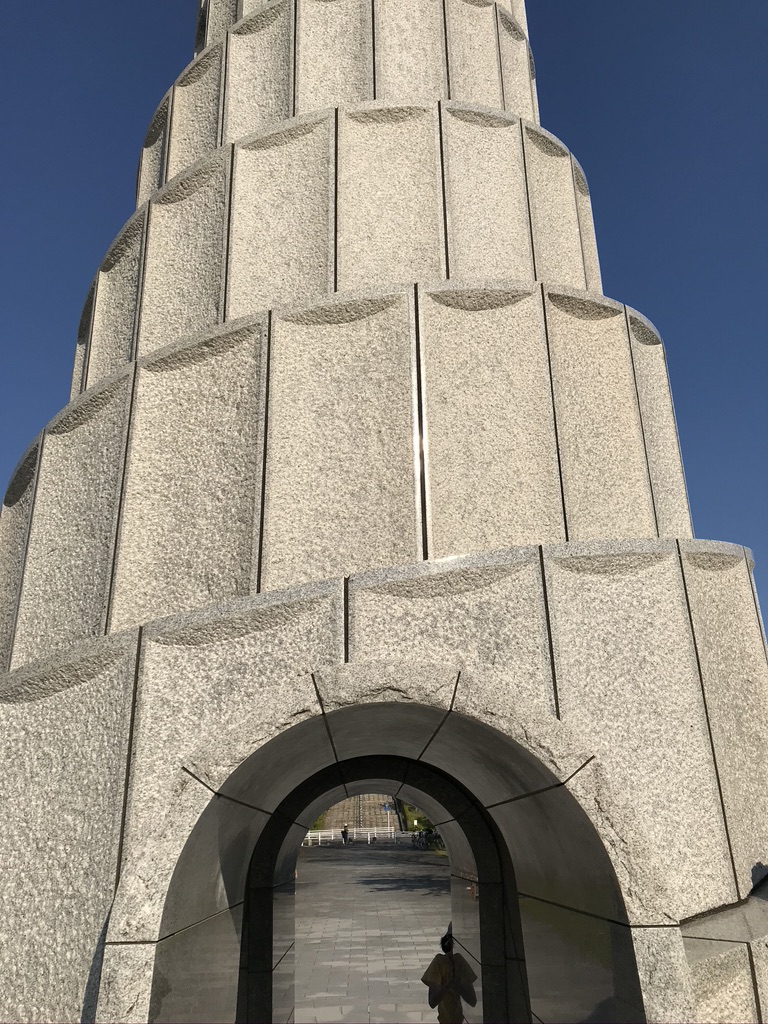
Heading out yesterday on an excursion curated by Cameron, we found ourselves at a large cemetery, the Heiwa Koen Cemetery, both a Peace Park and a graveyard. It is a beautiful, quiet space. Extensive and inviting, with tombs, shrines, statues and monuments spread across an undulating landscape. I was nervous to take photos, not sure of the protocol. So just stuck with the edifice below: Niji-no-toh, the rainbow tower, that produces a rainbow effect on the day of the spring and autumn equinoxes.

Petals
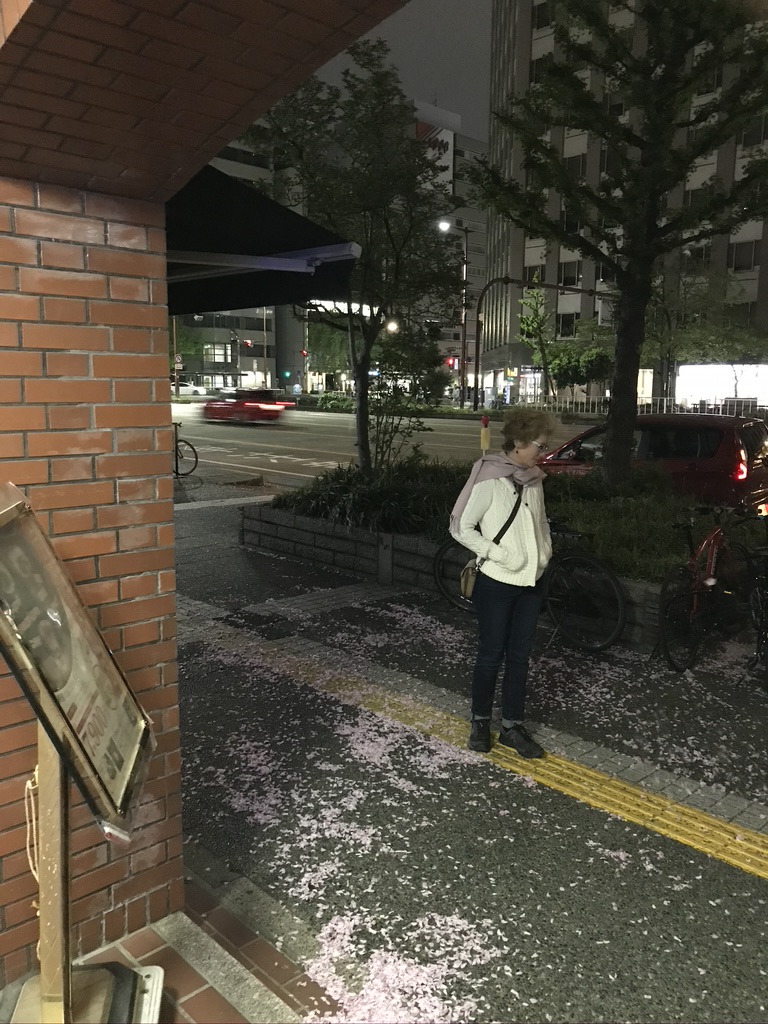
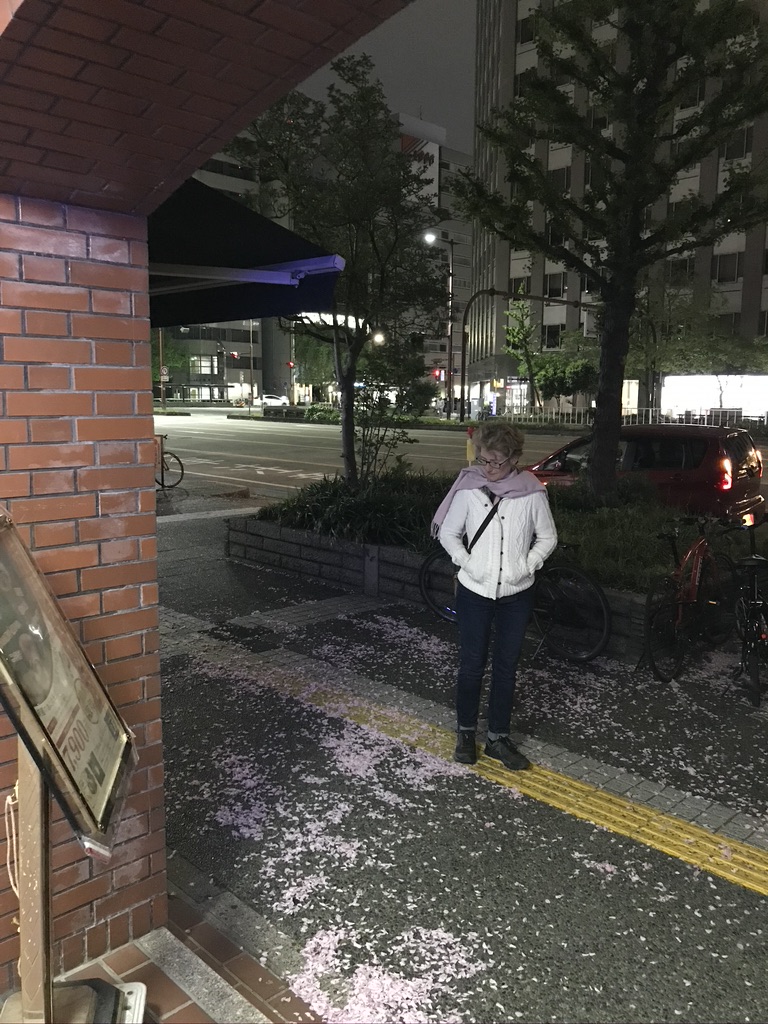
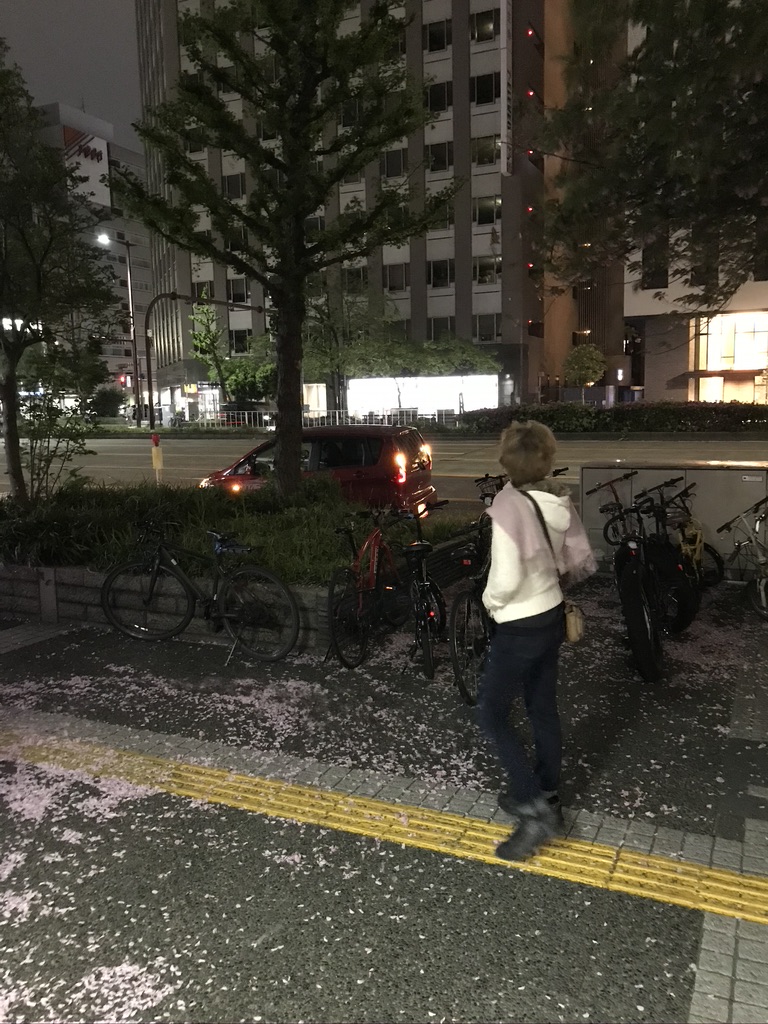
Outside our apartment. After pizza and gelato downtown. Not able to ignore the petals. Knowing, soon, they will be gone. And they will be missed.
Meditation
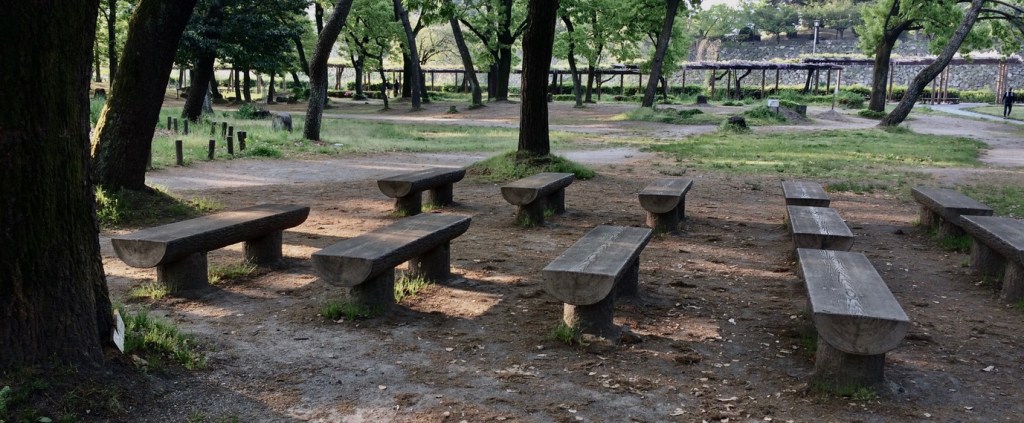
Eyeing off these benches, since I first made their acquaintance some weeks ago. Clearly a church of sorts, beneath a beautiful tree, with a castle peering over, benevolent, at least for now. Today I took some poetry, a scarf, a timer. I sat on the third bench from the front, this side of the tree. I reminded myself of my self. Listened. Remembered. I kept my eyes closed, despite the commotion developing around me and my pew. Although, inevitably, the clatter and chatter seemed loud enough and intentional enough to warrant a peek. My need for deep attention was in conflict with the needs of the group buzzing about me who had in a short time placed cushions on the pews and set up many numbered flags about the park to commence a game which looked like something between golf and croquet (gateball perhaps?). I got up, humbly bowed and uttered ohayo gozaimasu to a small indifferent crowd.
Shopping
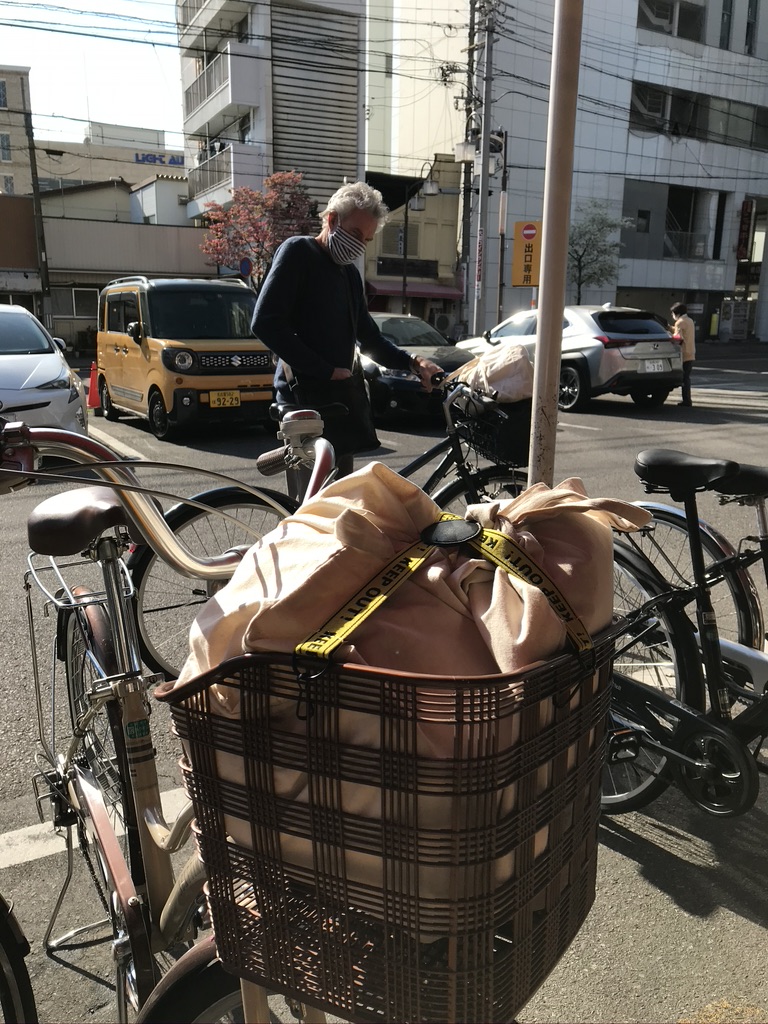
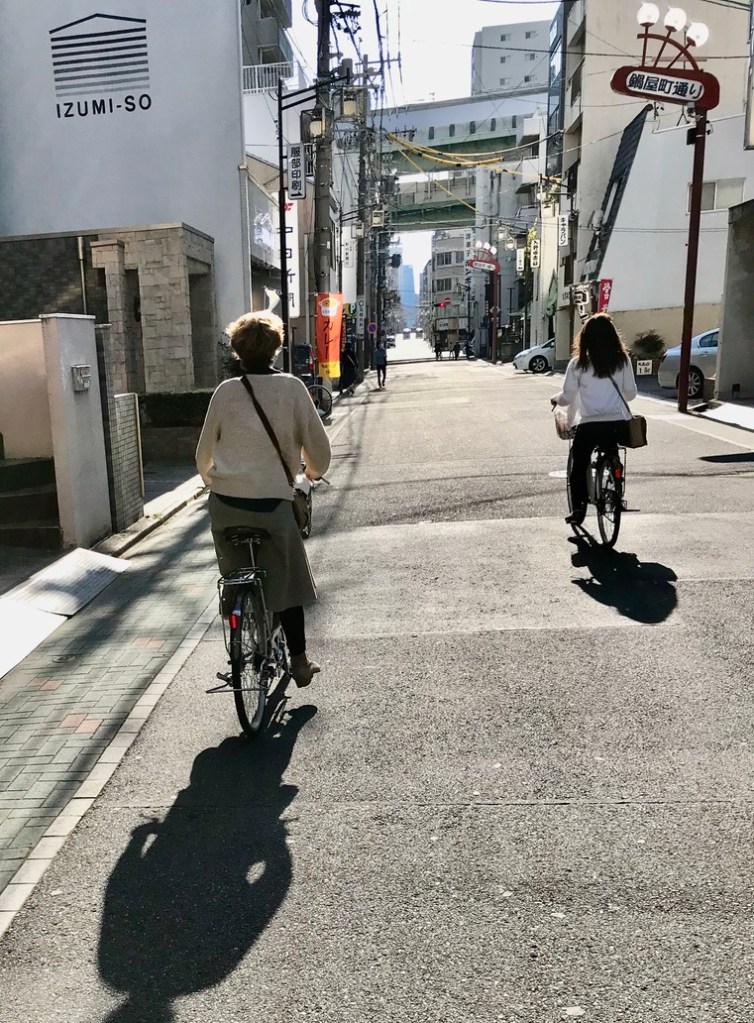
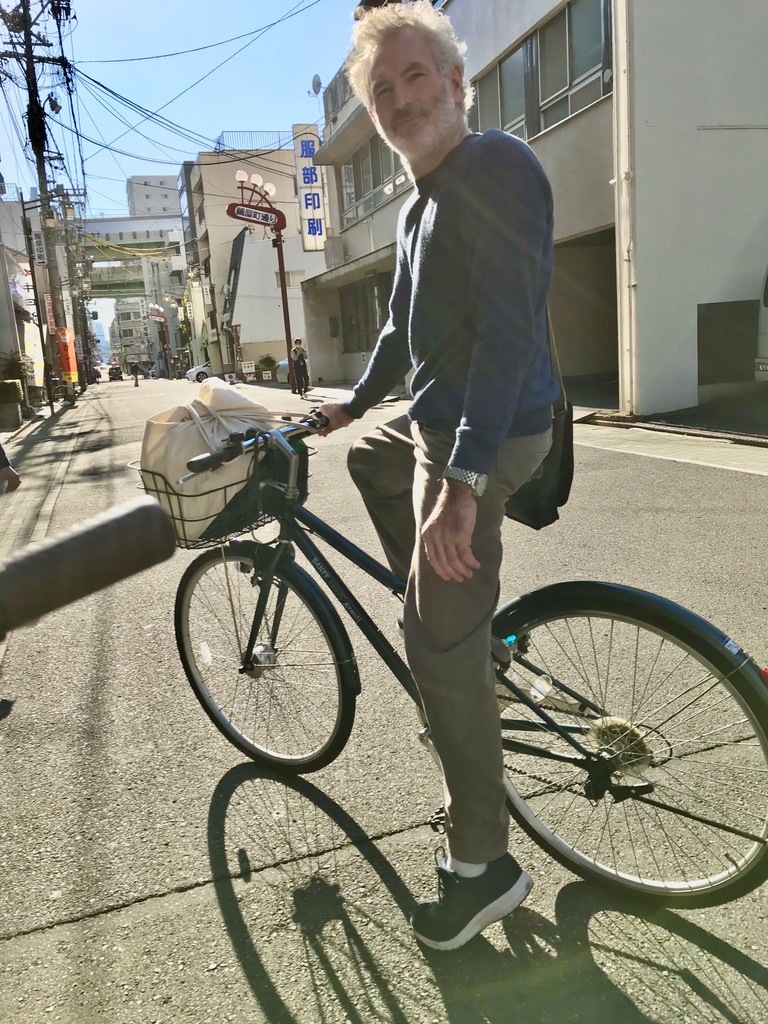
It’s a delicate operation, dependent on the beer supplies. We both have baskets, but they get front heavy making for an interesting ride home. This is the easy part though. We are not always sure what we are purchasing. I have probably already told the story of the dried porcini rehydrating in our minestrone that tasted like dehydrated jelly fish and WAS! We do our research but sometimes it’s just “it’s the colour of fukujinzuke so let’s just buy it”. A few interesting things have been tried using this strategy.
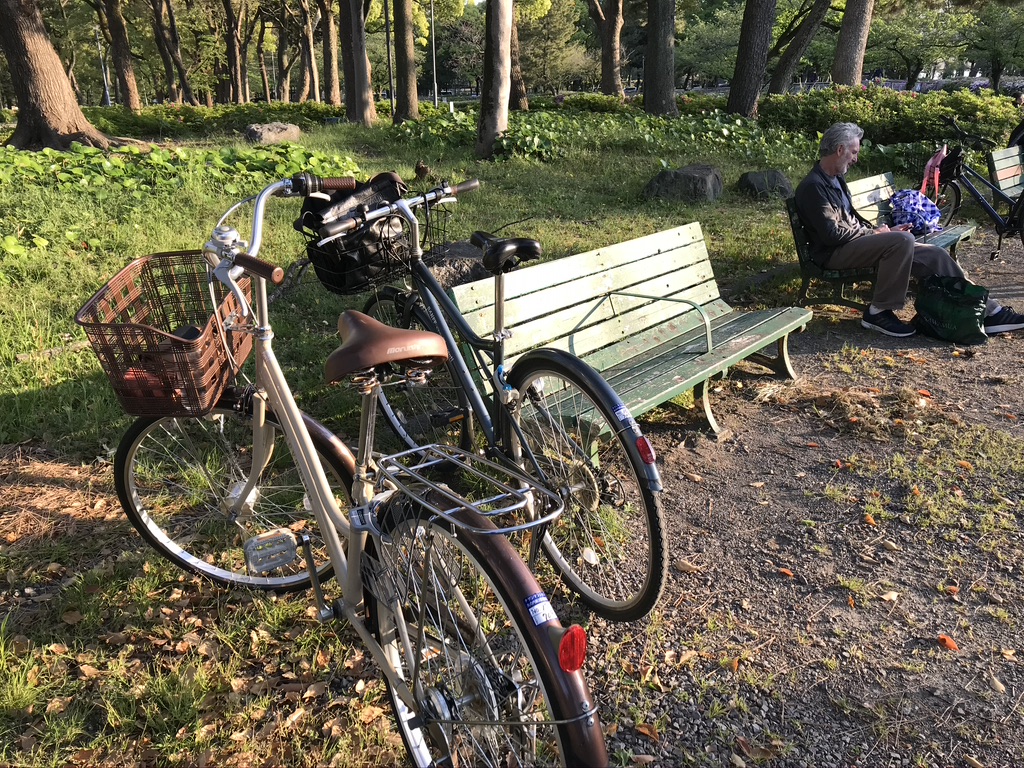
Our new friends at Meijo Park at beer o’clock
Gilded beauties everywhere
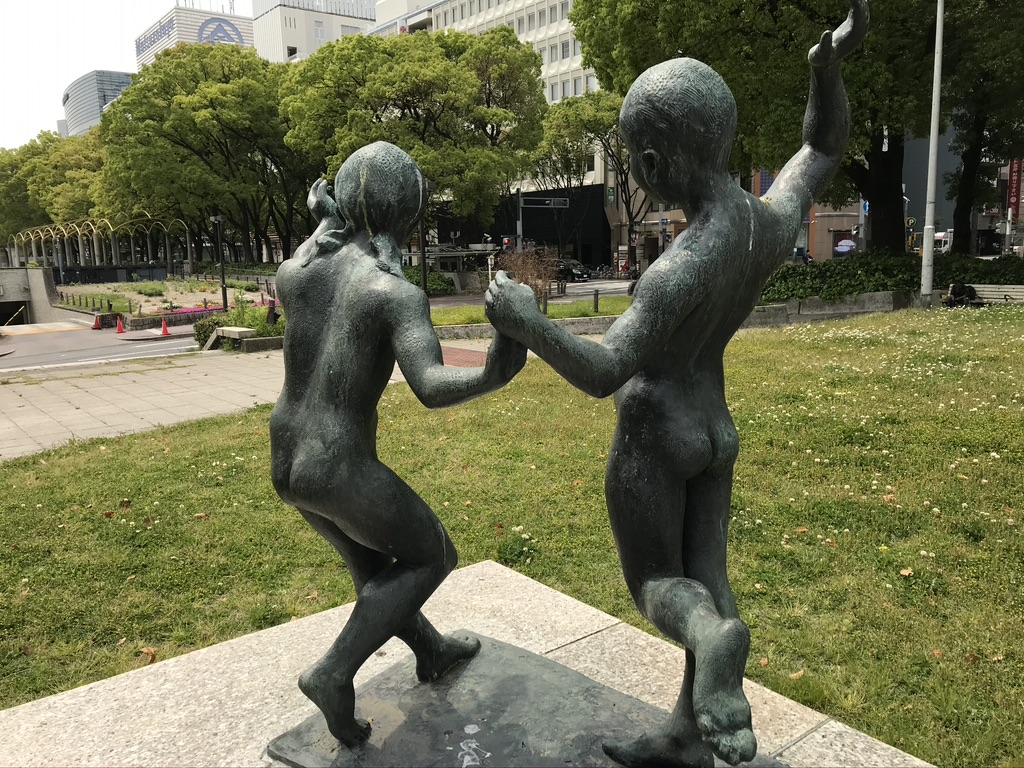
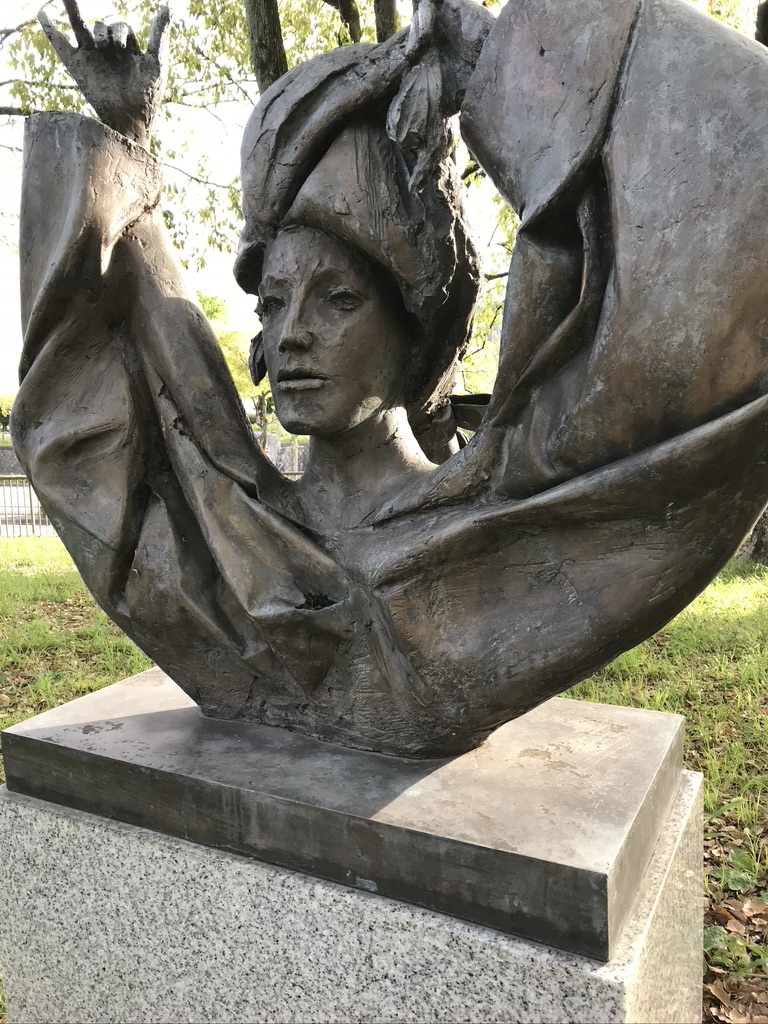
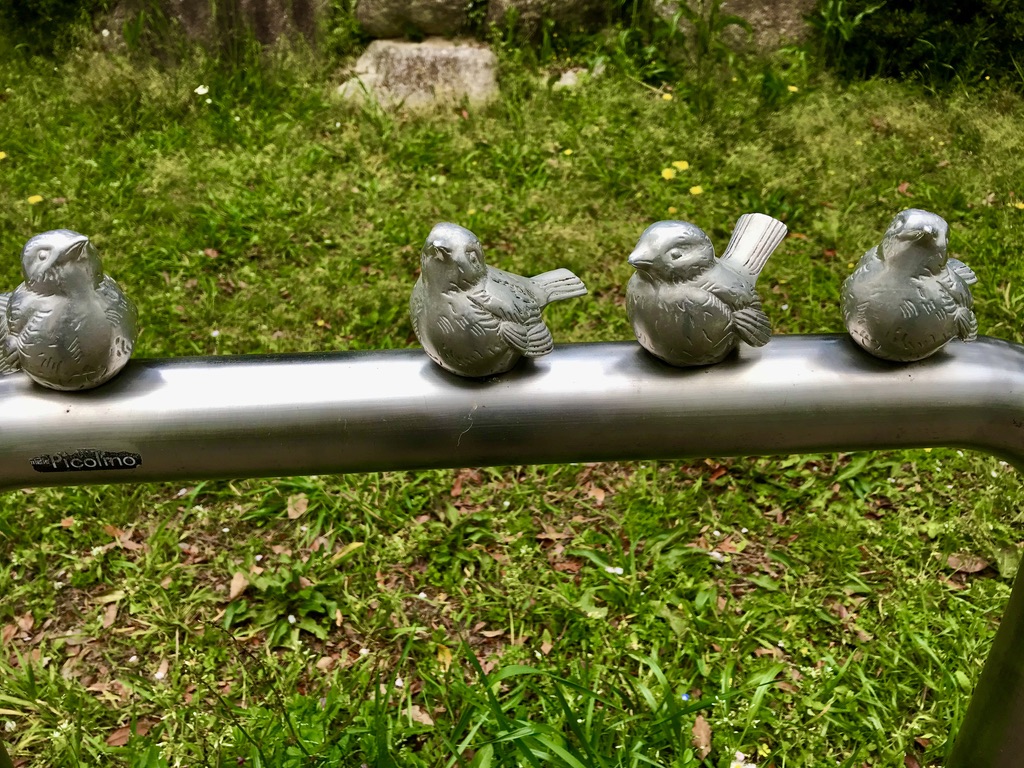
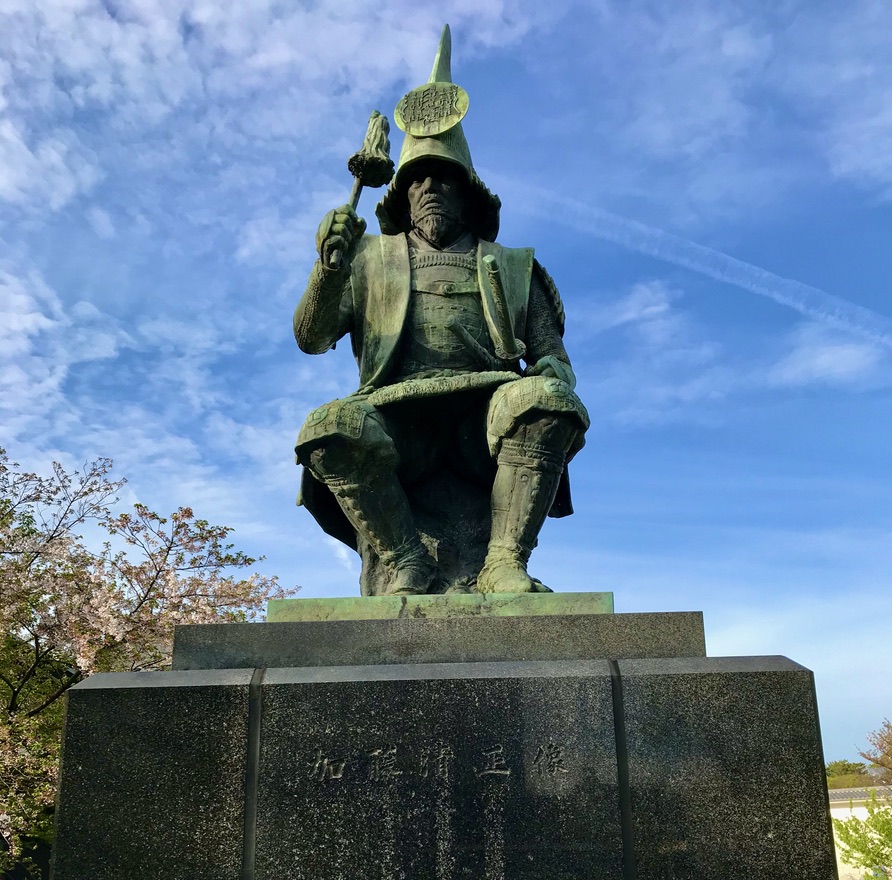
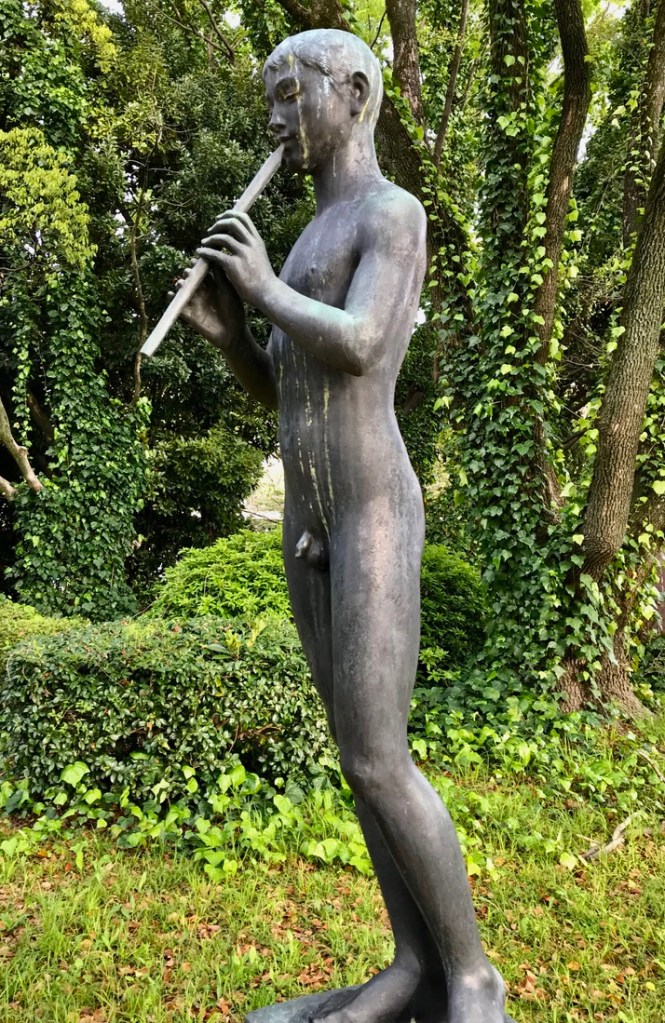
There are many bronze sculptures in our local area. I am often surprised to come across them. Some take centre stage, literally, but many are minding their own business on an incidental corner or around the back of a building in an overgrown patch of green. Some statues are very playful. Most are lovely actually. They stop me in my tracks. Like Fuefuki Boy (1967) and Cuillette (1865 Emile Antonine Bourdelle). Bourdelle has an impressive CV, student of Rodin, teacher of Matisse, and yet I almost missed Cuillette weaving magic with her hairdo. We were kicking stones through one of the Performing Arts areas near our place, all quiet except for a few dudes doing acrobatics on their sick bikes. And there they were, Cuillette and Fuefuki boy and the funny sculptured stones in the photograph below, creating a circle and a surprisingly comfortable seat or bed for a few moments of rest. I can’t wait for the local museums and galleries to open again. I’m excited to see what’s been sleeping in Nagoya during the state of emergency.

Telephone boxes
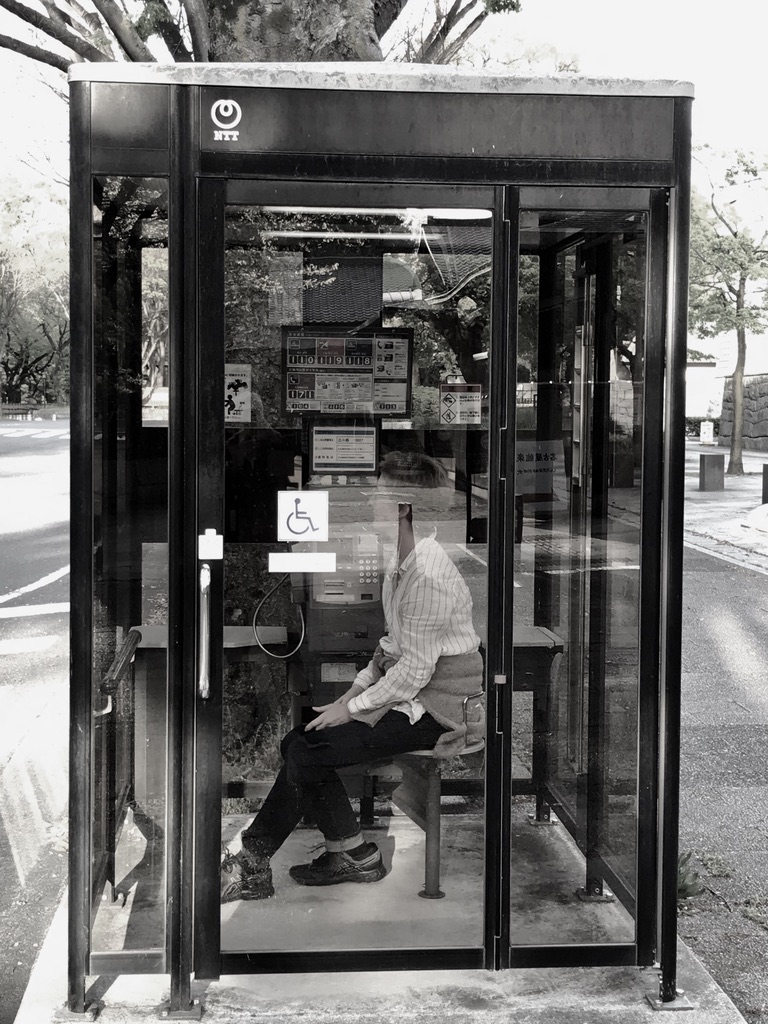
Another not uncommon site. A telephone box. But this one, commodious to enable access for all abilities. The seat is movable. And. I guess. What made me want to venture in was some sense of possibility. A room, not much smaller than my apartment, with a hinged chair and a telephone. It might have done with a coffee machine. But I could be happy there. For a moment at least.
Shirotori Garden
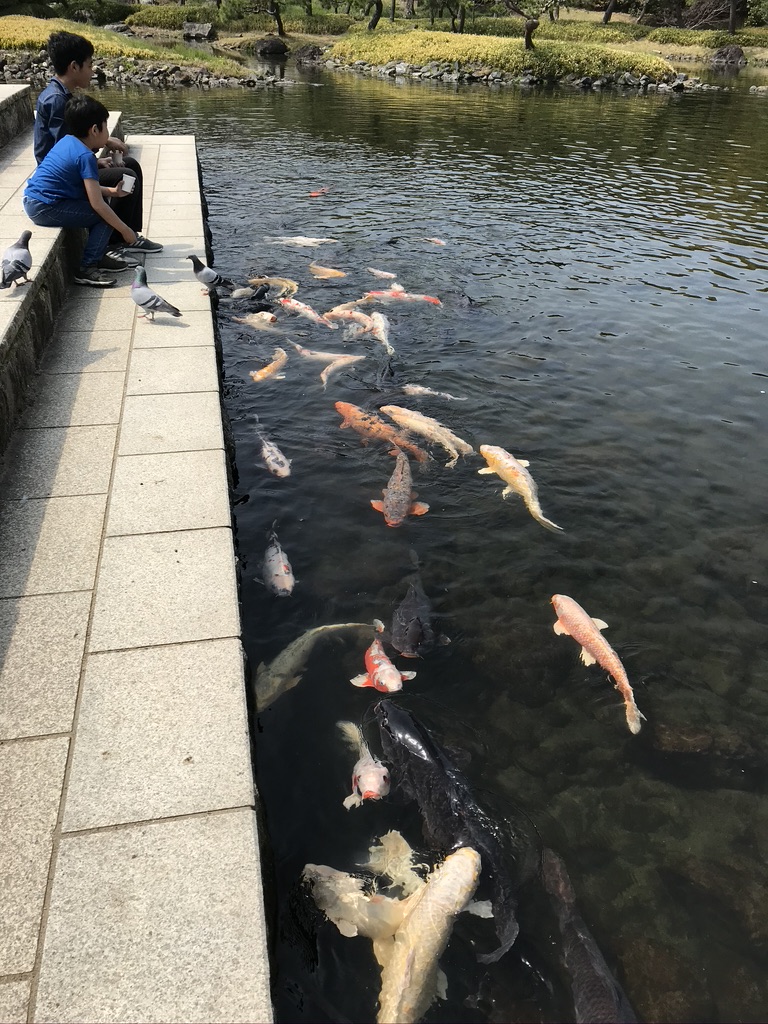
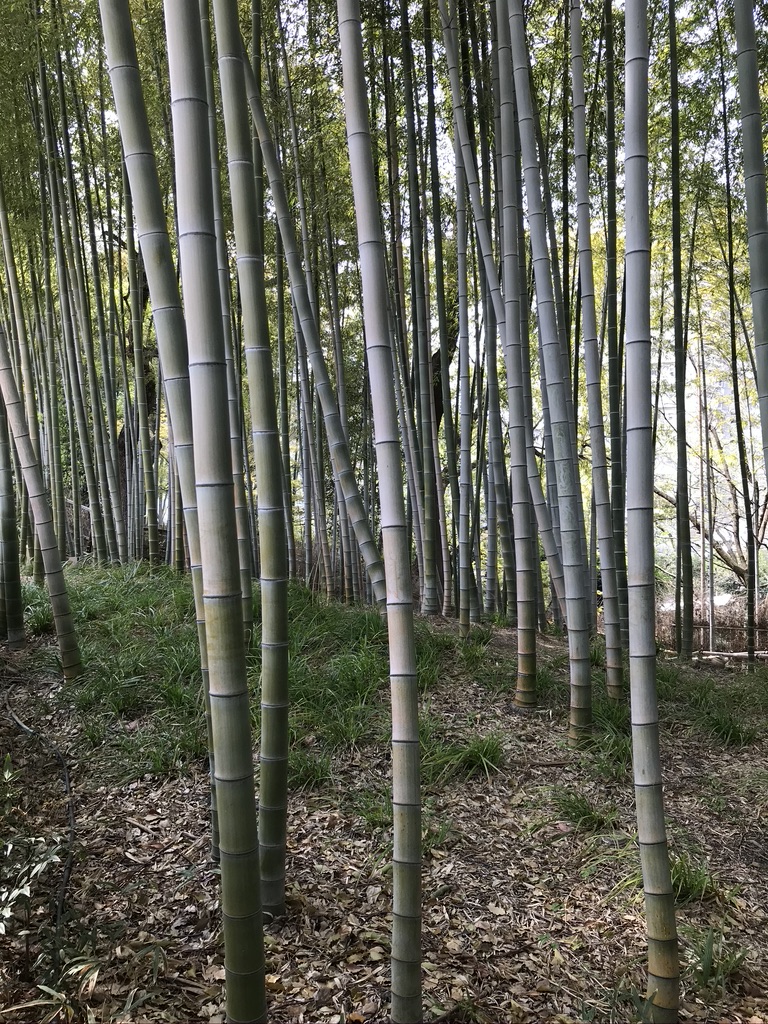

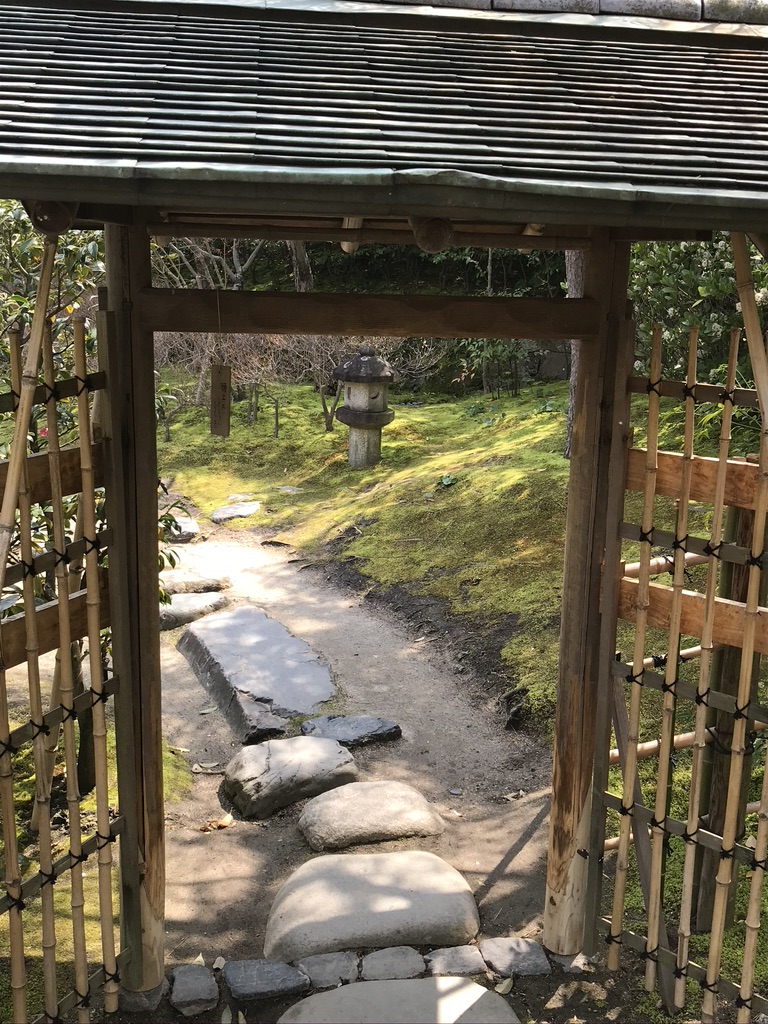
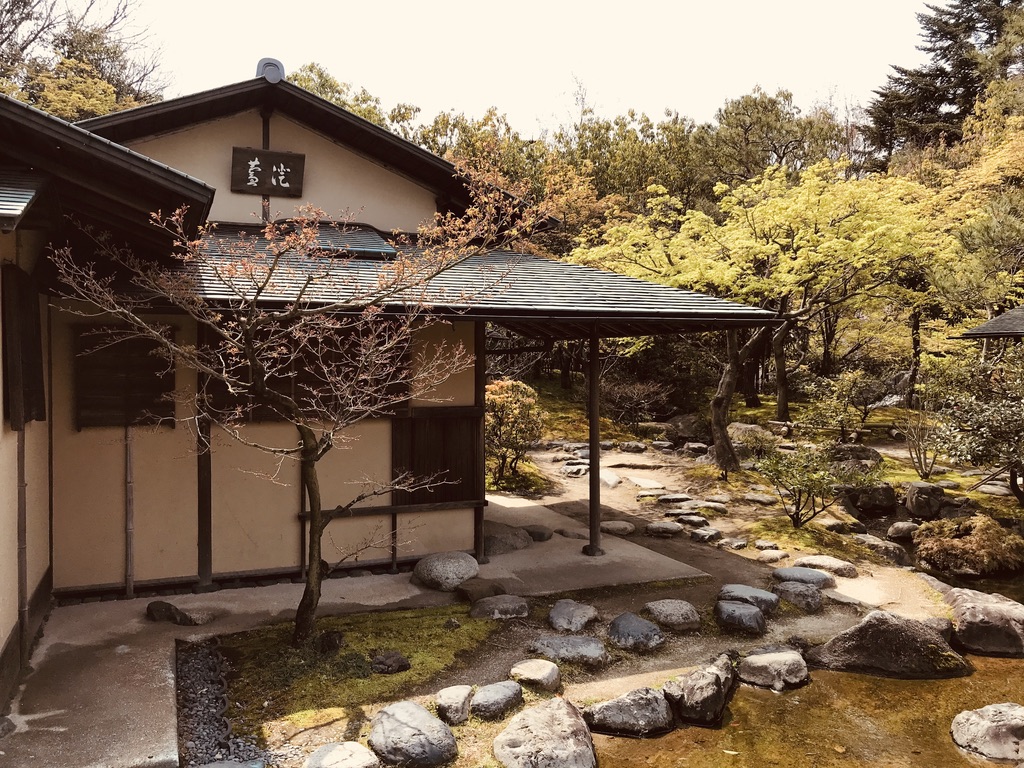
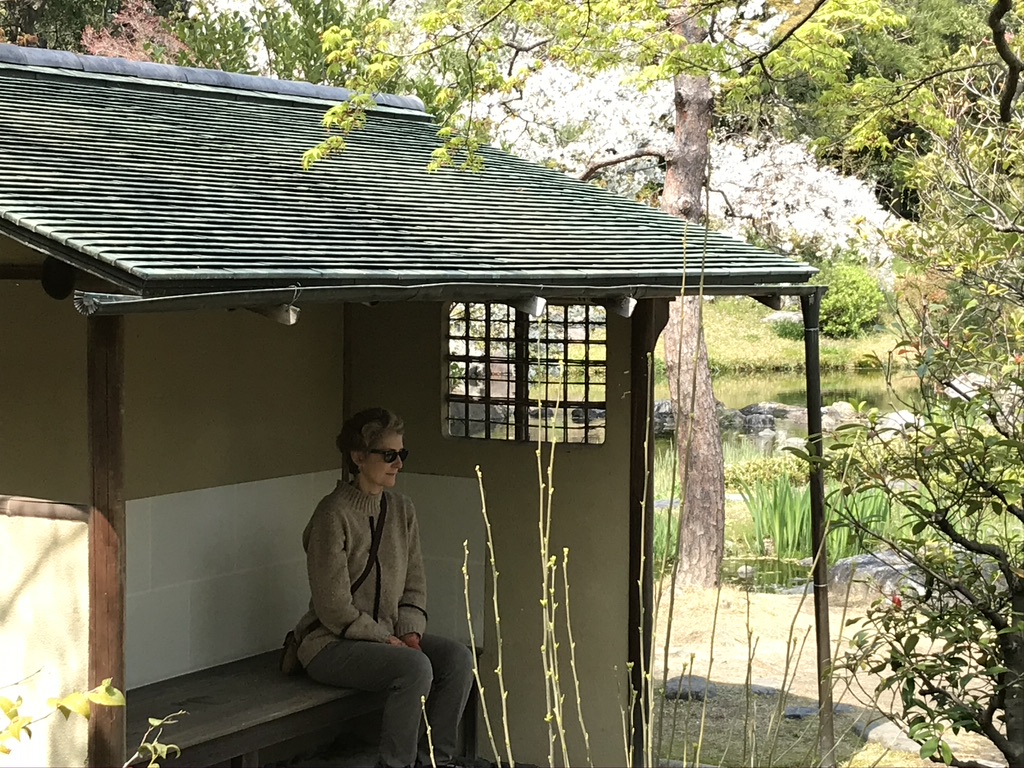

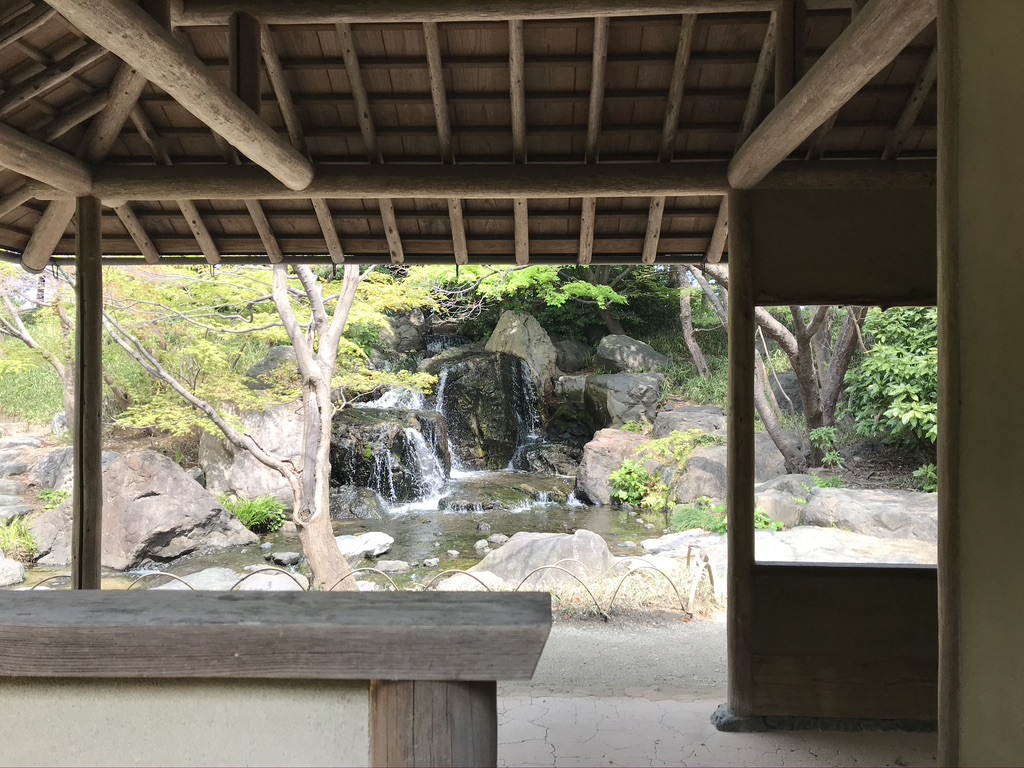
Cam and I visited here some weeks ago. A peaceful place inviting a quiet gentle slow passage. Except. A woman. Beckoning. With gestures, Japanese language and a sense of urgency. Was something about to close? Imminently? The small gate she ushered us toward was alluring. What did it lead to? I felt, if I agreed (and I was in her tractor beam), I would be drawn into a fairy tale, and may just become part of some concoction of which required final seasoning of small toe from middle aged red haired Australian born woman (hardly exotic in these parts). She looked innocent enough. But her gesticulations, both physical and tonal, had me thinking she could be inviting Cam and I to our end, but………….a gate is a gate is a gate and once happened upon must be entered, especially if they bear stone paths, mossy banks, bamboo water features and creeks whispering over stones positioned by the gods the night before…….Hmmmm. I was hers. So, the place we came to, after entering through the gate, down the pebbled path and beyond the Japanese tea room was the cherry blossom tree you can see in the two photos above. The gate, the path and the generous spirited slightly-crazy woman, led us to The Tree. I stopped here for a bit. The Tree now had me. Perhaps She became the Tree? There was something about her, the tree, that’s for sure. I became quiet, still, my eyes welled, tears fell, was it her age, did she hold some secrets, the tree, was it her beauty, or the way she leaned over the creek, as though to massage the water with her wizened fingers. Did she speak? That mossy way trees speak? I’m not sure. I listened as best I could. The tears, my response.
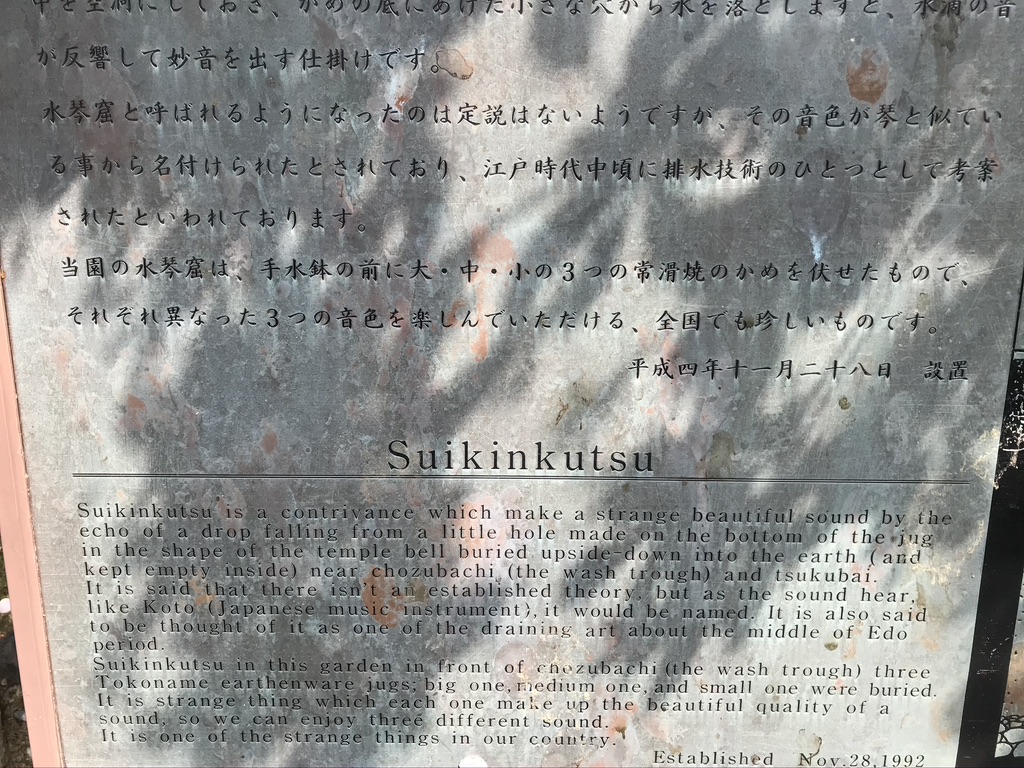
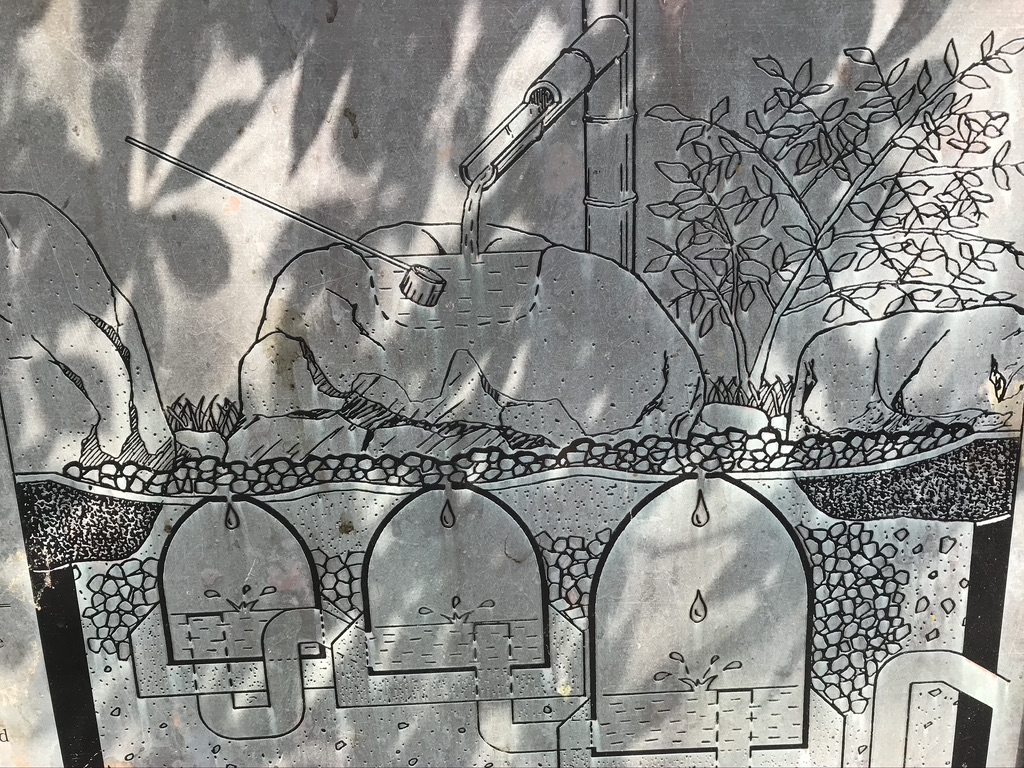
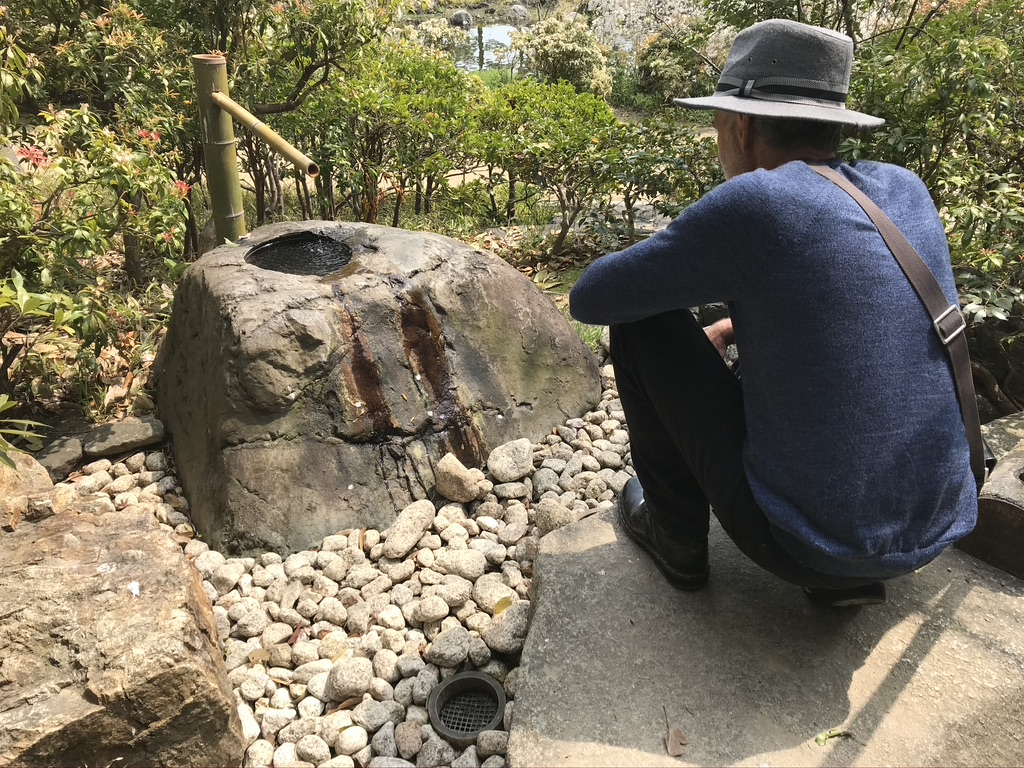
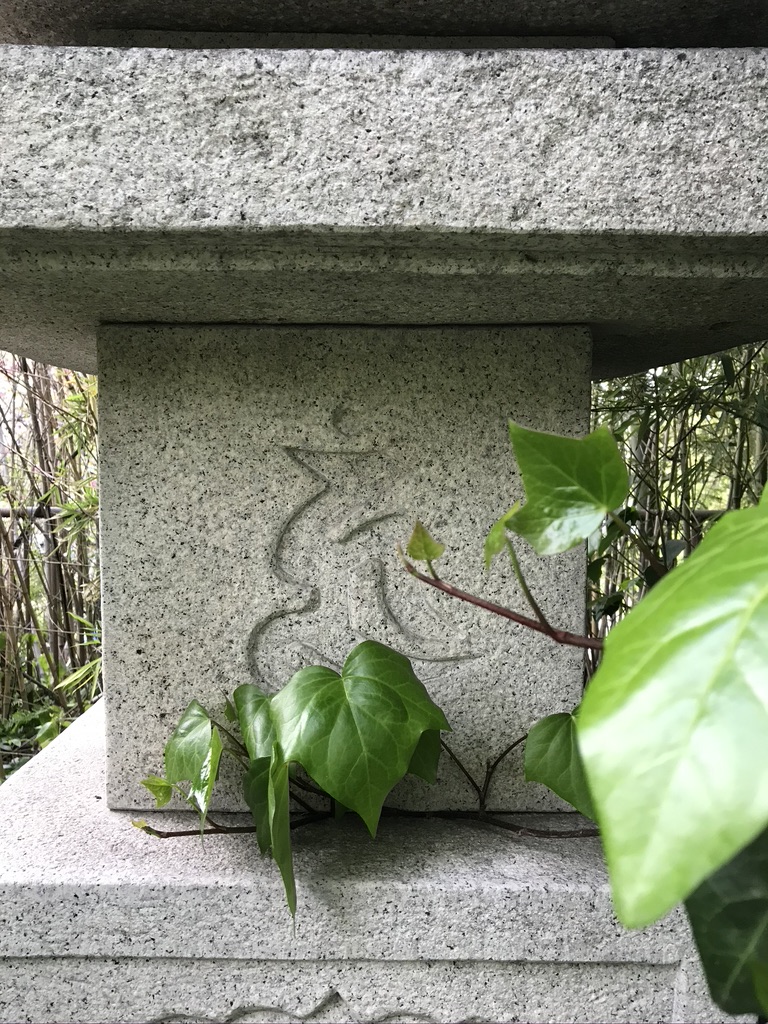
And this, Suikinkutsu, if you are able to read the words inscribed on the plaque in the photograph above you will see it is a “contrivance which make a strange beautiful sound by the echo of a drop falling from a little hole made on the bottom of the jug in the shape of the temple bell buried upside down into the earth…….”[as seen on the plaque in the second photograph]. I could not hear a single thing until I edged closer. Brought my good ear lower to the ground and heard something. And then heard more somethings. Goodness. A strange and beautiful sound indeed. I hope the audio recording I took and attempted to post on this blog can be heard by you too (the bells don’t sound immediately, you will have to persevere for at least 15 seconds to hear something other than the sound of water and crows and me fumbling with my iphone). Cameron is sitting in front of the suikinkutsu. I had to remove my ear from the ground to take the photograph.
Love Susan xx
Teach Gently
Slowly. Slowly.
From the quiet harbor of no teaching these words seem a failsafe. Easy now to think I should just take it slow. Adapt gently, take the new learning as it comes, integrate what is necessary, discard what makes things clunky or too difficult. Hmmm. In a few weeks time, when (if?) we are returned to work, will I be able to adjust my beat to this rhythm or will it be anxiety-ville all over again?
For now, from 13 April til 6 May we are on a break, our employer, ECC, cancelling classes for this period as part of the wider measures Japan has recommended to flatten the curve. The break is welcome. Cam and I are starting a routine of learning Japanese. More slowly, slowly. Today I made a face mask, double sided, pink cotton/grey and white striped seersucker. Cam is out looking for second hand bicycles, hoping that if we are able to stay in Japan we may also go exploring on wheels. We are eating more, trying to put on the weight we rapidly lost with our soup and salad diet and a schedule with few meal breaks. If that doesn’t work I am buying suspenders to keep my trousers up!
Our classes consist of many levels. For the young ones (18 months to 15 years) there are A, B, C and J levels. Each of these levels has a number of sub-levels: AK, AL, AM, AN etc and each of the sub levels have different lessons to cover the 40 week teaching period across the year. There are some anomalies. RTN classes for those young ones who have returned from abroad with reasonable fluency in English and needing a more tailored lesson plan. The lower A levels, aka, mini-kids involves much singing and dancing. While I love to dance, my moves aren’t really appreciated by the little ones. I tried some hip shaking with some older kids the other day trying to keep them away from the certificates I was about to distribute. They thought that was hilarious. Note to self, contain my moves with the under 5s, go for it with the over 6’s.
Singing of course is altogether different. Best to avoid that for everyone’s sake. I am listening to Lou Reed every night to sit by the master so to speak and practice a kind of word art that gives the impression of singing. I perform the ubiquitous ABC song as a Spoken Word poem. When I say ubiquitous I neglect to note that the endings are different: LMN as opposed to LMNOP etc, so it takes some intelligence and skill approaching this new way of singing the alphabet. I’m up for it though.
The C Levels (9-12 years) and J levels (12-15 years) carry a reputation. Or, perhaps more correctly, we, the native teachers carry a reputation for these dudes. I gird my loins before I go into a J class. If there are more than 5 J level students in one room I quickly consider the merits of bolting. Last week I had the fortune of teaching a private J class. One student, her name Mao, and sweet. We were talking about her favorite TV programs and I was feeling momentarily like an interesting person with something to offer and I was getting the goss on contemporary culture for young people in Japan. Then, 5 minutes into the class another student walks in. And then another. And then another…..Now there was Mao and five other students. SIX. And not time to consider bolting. And. To make the experience more chilling while Lesson 8.3 was new for Mao it was extraneous to Oceans-5 who had completed this lesson just last week. Rather than tell me this in English, as they stared at me demonically, when I asked them to complete a short written activity in their workbooks, they whispered in Japanese to each other, with occasional evil glances my way. I peered more closely at their books to find a clue to their agitation (they’d done it already). I turned to Lesson 8.4. It didn’t exist. 8.3 was the last lesson for the year (the academic year commences on the 13 April). I pretended I knew what was what. Actually this is an invaluable skill in this role. On my first day of teaching in Japan, a core teacher said to me. Whatever you do act confident. It’s good advice. So, no 8.4. Thinking I’m done for, I draw a quick Hang Spider on the whiteboard – and 9 blanks as the first clue to decipher the word ‘butterfly’. The J’s give their best to this activity and decide emphatically, as the word almost reveals itself that it must be “butterly”. “Butterly, I exclaim. What is butterly.” This is my pathetic comeback. They really couldn’t give a shit. I wanted to be a butterfly of course, but nature wasn’t going to grant me such an easy way out.
Actually the J class I had before this one was just 3 students. But it was also frightening. They laboriously echoed my wishes to chorus English phrases and then spoke Japanese with each other in the in-between moments, clearly openly reflecting on my really really bad teaching persona. But. One of the students could not keep her eye off the bandage poking out from my shirt sleeve. Ahhhh, I have you I thought. “Oh this old thing?” “This is a very long cut” – I helped them out with the comprehension side of things and gestured the slicing of a piece of flesh. “It’s very painful”. “”there are many stitches”. “You know stitches?” I pointed to the hem line of one of the student’s skirts and gestured sewing with a needle and thread, but exaggerating the movement, because good teachers keep their students entertained. I could see the interest waning so I quickly dived in with an explanation of what was needed to remove the stitches. I accompanied my simple English with sketches on the white board and clear gestures. It was very good really. It was all downhill from there. But three minutes elapsed without pain and suffering on my part. I was happy with that reprieve. It was a little difficult for the girls to be mean to me after this, but they persevered and returned to their unpleasantness.
So, yes, it’s been fun!!
It has been fun. There have been lovely moments. I taught a small class of students in B-level last week. I invited them to play teacher. Each of the students had a turn at teaching the language structure to the other students. They were naturals and they loved this opportunity. I played student, helping out here and there. It was a win win. Last week I was sitting in on another teacher’s class to supervise while he was conducting individual interviews. I went rogue with the games because I was in a mood. The hacky-sack throwing game got wild and the ‘see how far you can walk before the toy elephant falls from your head’ also got a bit out of hand. The teacher walked in and politely said to me we should change the game. This was also fun.
I think there is going to be room for improvisation. I also think there is room for me to take the gentle approach. In this very brief time of ‘teaching’ I can see already that adhering to a curriculum is not making me a teacher. Listening. Being attentive. Liking myself. Trusting what I know. Trusting anyway. And. Time. Slowly, slowly.
Respect to my friends who are teachers.
Cam just walked in. He bought a bicycle. It has 6 strings and no wheels. In Japan they call it a guitar.
See you soon.
Love Susan xxx
Land of Convenience 2
“Ahh mate, it’s the land of convenience”. Glenn’s words were ringing in my ears as I sat down at my laptop, once again, on my day off. He was here before the internet was a thing. Though there are definitely a lot of convenience stores, at least 4 within 100m of our apartment. I’d been following this routine for 2 weeks. Time off equals trying to get the wifi working so Susan can access the internet from her laptop. The current ethernet arrangement was wearing thin as it only worked on my computer. After being quoted Y17 000 to have someone come and sort it out, I was feeling determined to resolve the issue myself. Anyway I didn’t feel too useless – Stephen, a smart young guy I met at work last week, said it took him 6 weeks to sort it out, and he’s got a degree in mechanical engineering.
So I began my ritual again with a renewed sense of purpose. Laptop connected to wifi, wifi connected to router site/settings but not the internet. I opened the browser on my phone to see where I’d gotten to last night. I’d been searching the help sites, “can’t connect wifi to internet, try these 10 steps”, etc., etc. Where was I? Ahh yes, this site from last night seems particularly apt – the 12 steps, after all I’d consumed most of a bottle of whisky during my attempts this past week. My phone goes from browser to google translate camera mode, back and forth as I read the tips then try to decipher anything in the all Japanese language settings that looks familiar.
Thankfully I was past the ‘pull your hair out phase’ and was feeling strangely at ease. I began casting my I-phone enabled eye over the top of yet another setting page and saw the words “How do you want to connect to the internet”. I turned to the check box options to find the ‘with ease and simplicity’ box. No such luck, but I did notice that it was set to automatic – sounds reasonable enough. As I moved my phone across the page, watching Kanji, Katakana and Hiragana slowly become English, I saw the characters PPPoE6, or some such, as a connection option. These vague characters somehow resonated and, as I stared at them, they took on a kind of numinous quality. Without waiting any further I checked that box. Up came the user and password page, at least I knew what to do here. Then I hit ‘set’ – 90 second wait, an actual countdown on the screen. 5,4,3,2,1, then glanced down at my wifi bars, the yellow dot was gone. “Susan can you please try the wifi on your computer”, further waiting. “Oh, oh, what did you do to get it to work?”
Where’s the last of that whisky?
Land of convenience?
I decided to take the subway and visit the business myself instead of using the online appointment system. After 4 weeks in Japan I’ve learned to take nothing for granted – especially when it comes to money. I needed to get out for a walk anyway, things were getting a little tense in our apartment. My laptop had internet via ethernet cable but the wifi router we had bought wasn’t connecting to the internet. For 2 weeks I’d spent a large portion of my spare time staring at the wifi bars with the yellow dot, laboriously going through the router’s settings, all in Japanese, with my phone set to camera mode in google translate. Clearly the router was connecting to our devices, but why wasn’t it connecting to the internet?
I had seen an add on my phone during my frantic searches for a solution. Home visits to solve computer and internet connection problems. English language no problem. the pricing seemed a little steep but I’m getting used to that here. There can be hidden charges just going out for a drink and feed – a per head table charge, around Y500 – not usually advertised when entering. Most prices for things are displayed as before (consumption) tax, which takes a surprising amount of time to adjust to when shopping. I arrived at the modest shopfront having had a nice brisk walk, the business being conveniently located halfway between 2 subway stations. I saw the slippers when I entered and realised my mistake in wearing my Doc Martins. It was only a 3m sq area of carpet, but customs are customs.
Like many of the service industry workers we’ve encountered, the guy who served me looked a bit freaked out at first when it was clear I only spoke English, but was good naturedly determined to press on. Business is business. Using our translating devices I managed to make clear the issue I was having and he proceeded to show me the cost structure that would be applied for them to resolve the problem. There were 3 separate charges, of course, and as I did my mental calculation I couldn’t contain an exclamation of surprise, “New computer”, I said. He smiled. It would cost Y17 000. I explained that I thought the problem was simple to fix, it was the language barrier that was thwarting me. He smiled and pointed to his pricing. I explained that I thought any high school student could probably sort it out, I just didn’t know any. He smiled again. It took a full 5 minutes to put my boots back on. We thanked each other and apologised to each other, but I had gotten nowhere. Thankfully the convenient location of the store meant that I had a good walk back to the subway. I needed one.
Stepping gently
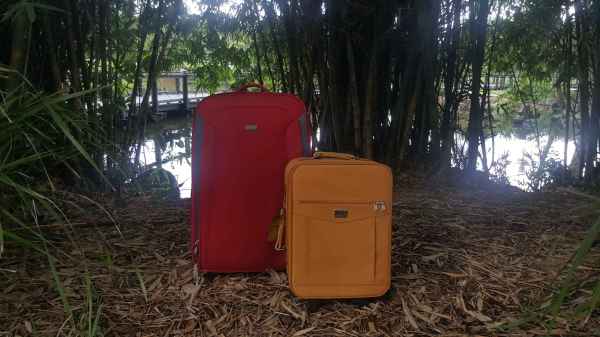
I don’t think I would have known where to begin. Except……The empress JHa designed this site (with the speed of a woman with super powers) and gave the first post a title. She explained it. Stepping Gently. It was the way it would be in Japan when we imagined it beneath the Elephant Rock at Currumbin. Japan has its own way. An eastern pace. No matter how busy, how preoccupied, you will only be able to step gently. And then the small g goddess GKe – the aesthetic…….everything smells, tastes, tones, feels and gently takes your arm to invite a twist in the direction of beauty…..just try to avoid it.
Could this all be true? I’m a limp teacher (now at least). The training was good. Maybe very good. But what happened to my personality. I saw something in the bin that could have been me! Creativity, Intuition out the window. And that was quite a feat coz the windows were closed. Didn’t I really come to fold paper, write tiny poetry with syllabic restraint, exploding the third line in a shock of nature’s awe? In two days, it’s been a month and all I’ve folded is my tired limbs. I’ve written lesson plans in colored texta. Not haiku. Not love. Not beauty.
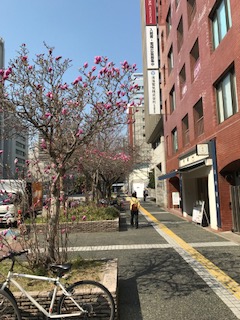
I did eat sweet potato ice cream. I have given time to the trees outside our apartment. Magnolias. Red Camellias. Slowly slowly making their spring offering. I have kissed Cameron twenty-seven times, following the enchanting organ music announcing the next train’s arrival. I have sat on thirteen heated toilet seats. I have left two toilets unflushed. These toilets have so many bells and whistles it’s remarkable to me that the part that says ‘Flush’ is unlocate-able. I have given way too many ‘thumbs up’ signs to people who have understood me – apologies to the westerners who have made a good impression in Japan – I blame it on our teacher training where ‘OK’ was recommended a visual panacea for almost everything.
I have seen a child of maybe 7, lug 5 bags into the train and out again, all on her own, but for the small gesture of Cam and I to share the load. I have shaken my melons and eggplants more times than is reasonable. I have give children a reason to miss their English class!! I have shared a croissant with an older Japanese man who only spoke kindness. I have asked Cam a million questions about what this means and that means and “can I really do this”. I have wondered if I have corona virus and if it is possible I was and always have been remedial. I have been asked to explain why in Australia, when looking for a hotel to rest your head, you are sent to the pub……..and I wished I could say because we are Awesome. On that note. I have drunk alot of Kirin.
Susan x

 Su Planting